Bitcoin futures traders are facing an uncomfortable reality. The carry trade that once pumped out 20% annual returns has slipped behind the most boring investment on the planet: short-term U.S. Treasury notes. For 157 consecutive days since February, the three-month bitcoin futures basis has underperformed two-year Treasuries, marking one of the longest such stretches ever recorded.
Back in 2021, the math was intoxicating. A trader could short bitcoin futures while buying the spot asset simultaneously, pocketing the spread between the two prices, known as the basis. Those spreads regularly hit 20% or higher during the bull run. Rinse, repeat, collect. The strategy worked across regulated exchanges and unregulated platforms alike, delivering what looked like free money.
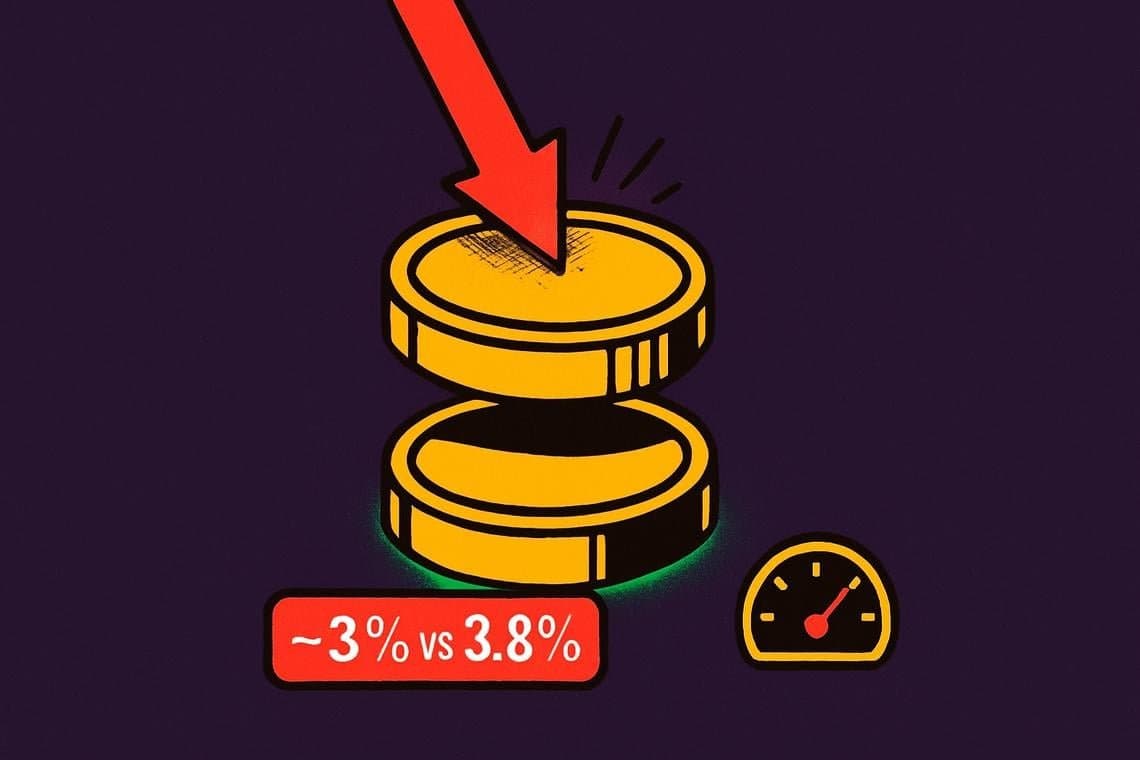
That edge has evaporated. Today the same trade returns roughly 3%, while two-year Treasuries yield an average 3.8%. The gap widened as bitcoin futures trading volume cratered from a peak of 1.47 trillion dollars in February to around 880 million in July, according to Coinglass data. Fewer traders chasing the same arbitrage opportunity means tighter spreads and thinner profits.
The collapse looks bearish on the surface. Carry traders are the lifeblood of derivatives markets, and when they abandon ship, something feels broken. But analysts see it differently. A shrinking basis actually signals greater liquidity and a maturing market, they argue, not a warning sign. When basis trades compress, it means the market is pricing bitcoin futures more efficiently relative to spot prices. That's healthy. It means the arbitrage gap that once attracted carry traders has closed because institutional money and better infrastructure have made the market more rational.
The shift reflects how crypto derivatives have evolved in five years. Regulated venues now compete aggressively on volume and fees, pushing out the kind of inefficiencies that traders exploited in 2021. Spot and futures prices converge faster. Funding rates adjust quicker. The easy arbitrage is gone. Carry traders are either moving capital elsewhere or accepting that bitcoin futures are no longer a casino where you can print money.
This article is informational only and does not constitute financial advice. Trading derivatives carries substantial risk.