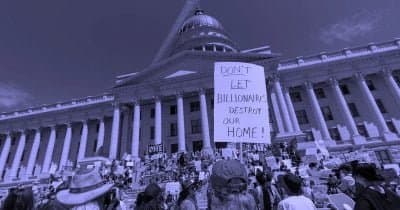
Thirty-seven people have been arrested across America this year for showing up to public meetings about AI data centers. The charges are trivial: clapping, talking past a time limit, refusing to show ID. A maintenance manager in Indiana. A physics teacher in Kansas. Ordinary residents asking about water usage and electricity bills.
The arrests mapped across America
A Futurism investigation documented 37 arrests spread across multiple states, nearly all tied to town halls discussing proposed data center expansions. In Hobart, Indiana, Pablo Payan was detained in May for refusing to identify himself during a meeting about an Amazon facility. In Emporia, Kansas, physics teacher Lux Claridge was arrested in July for applauding. She was supporting another speaker when police decided her clapping was disruptive enough to warrant handcuffs.
Three more were arrested in Port Washington, Wisconsin back in December 2025 for opposing a $15 to $18 billion AI data center campus being developed by OpenAI and Oracle. The investigation also found at least 12 incidents where speakers were physically removed from meetings or blocked from addressing the room entirely. Most protests remained peaceful. When escalation happened, it typically came from police enforcing procedural rules, not from any actual violence.
A familiar playbook for the crypto world
Communities pushing back are asking straightforward questions: How much water does this use? What happens to our electricity rates? Will this destroy farmland? The response has increasingly involved police presence. This mirrors what Bitcoin miners faced over the past several years. Texas towns, New York municipalities, and others fought back against large-scale mining operations citing noise, energy consumption, and environmental damage. New York even moved to impose restrictions. Data centers are now following the same trajectory as those mining facilities did, drawing organized community resistance and, apparently, aggressive law enforcement responses.
This article is informational and should not be construed as financial or legal advice.