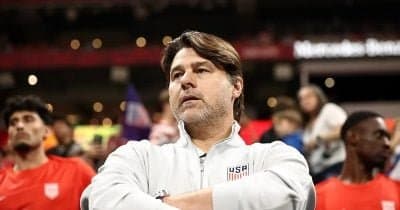
Mauricio Pochettino just locked in a four-year deal through the 2030 World Cup. The US Men's National Team is committing roughly $24 million to keep one coach in place while the country hosts the Olympics in 2028 and then co-hosts the World Cup in 2030. That's $6 million annually, comparable to what top national team coaches make globally. The contract wraps up the previous deal that concludes after this summer's tournament in America, Canada, and Mexico.
What matters here is what Pochettino's deal signals. US Soccer is thinking like a corporation planning a revenue cycle. The federation is locking talent across two massive events on US soil because American sports now operates on venture capital logic. Media rights sell for billions. Tournaments become infrastructure for entire ecosystems.
The Blockchain Layer Is Already Building
Fan tokens exploded first. Paris Saint-Germain, Barcelona, and Manchester City all launched them through platforms like Socios. These aren't just merchandise, they're tradeable assets that let fans own a piece of club participation. Now the 2026 World Cup is attracting Web3 sponsors and fintech payment providers because the economics work. Combine 4 billion global viewers with a US-based tournament and blockchain payment rails, and you get something crypto builders have been waiting for.
Apple already paid enormous sums for MLS streaming rights. That contract set a floor. Now tokenized media rights, NFT ticketing, and blockchain loyalty programs are moving from concept to deployment. The first World Cup held primarily in the United States becomes the first major tournament where crypto infrastructure gets tested at scale. No hypotheticals. Real fans, real transactions, real Web3 rails handling payment and ownership.
For traders watching this space, three angles matter. Fan token adoption curves during 2026 will tell you if these platforms can convert casual interest into sustained liquidity. NFT collectibles tied to the national team create a new asset category the SEC hasn't fully tackled yet. And prediction markets, especially decentralized platforms that regulators are already scrutinizing, could see either massive expansion or regulatory clampdown before 2026 even starts.
Pochettino's long-term contract is ultimately a bet that American soccer becomes valuable enough to plan around. But it's also a signal that institutional money sees the next four years as a window where sports meets digital assets in ways that haven't happened before.
This article is for informational purposes. It's not financial advice and should not be treated as investment guidance.