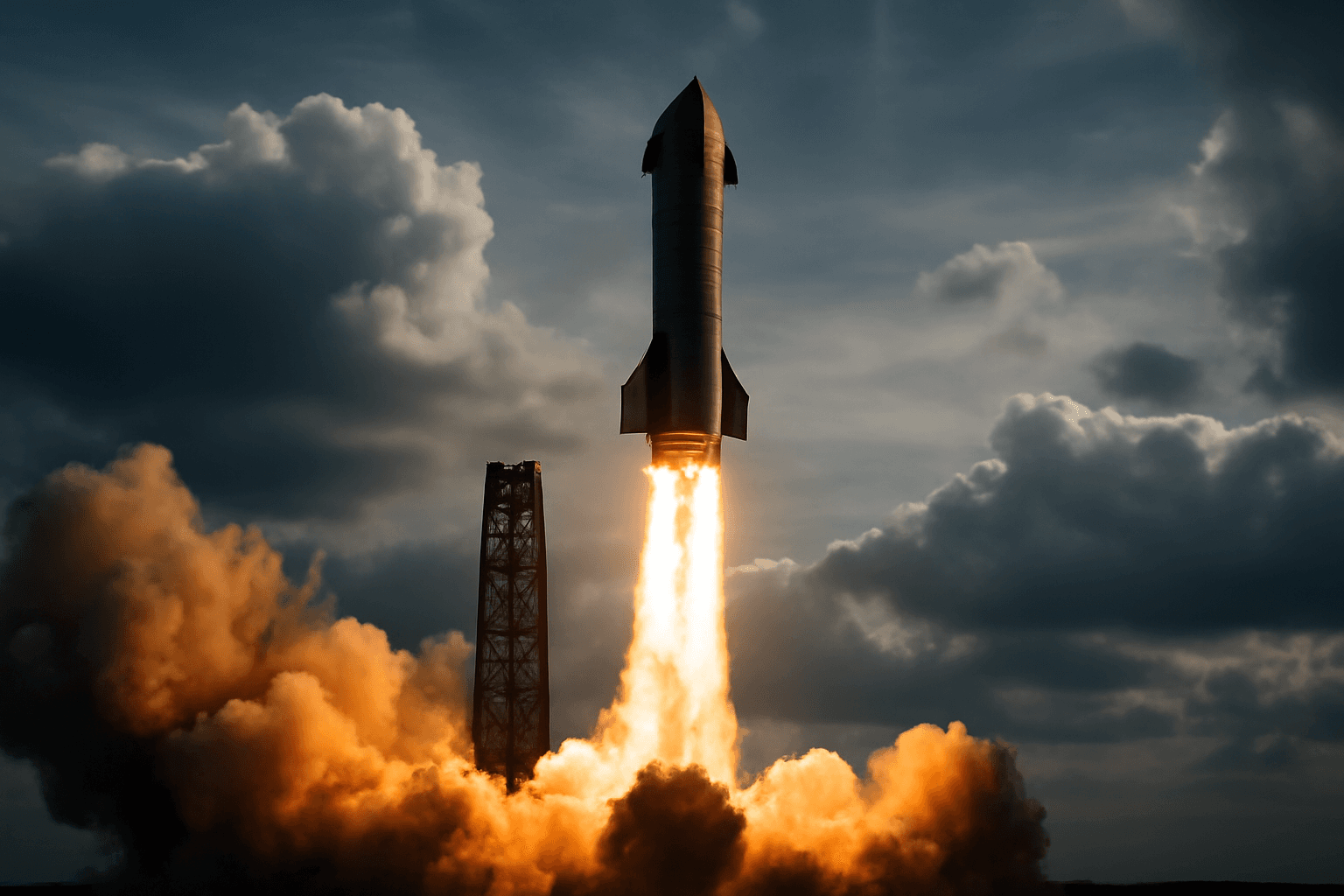
On July 24, SpaceX launched its 13th Starship test flight, successfully deploying 20 of its latest Starlink V3 satellites. This flight stood out not just for the satellite release but for its smoothest ocean splashdown yet, where the upper stage floated gently in the Indian Ocean. The careful retrieval allowed engineers to get a clear look at the heat shield, intact after reentry something they hadn’t achieved before.
The V3 satellites marked a big leap forward. They can handle up to 1 terabit per second of downlink capacity, about 10 times faster than the previous generation. On the uplink, speeds jump to 160 gigabits per second, a 22-fold boost. These improvements suggest Starlink’s next phase could support far more data-heavy applications and users worldwide.
Despite this technical success, SpaceX’s stock remained fairly flat. SPCX shares hovered near $115 post-flight, roughly 15% under their $135 June IPO price and just slightly above the recent low of $110.85. Investor skepticism seems rooted in concerns about the Starship program’s high costs and the company’s cash burn, balancing out the excitement over the satellite deployment's success. The stock’s muted movement shows a cautious market still digesting what this means for SpaceX’s financial future.
The flight itself faced delays due to technical glitches but eventually took off from Boca Chica, Texas, with the Starship rocket riding atop the Super Heavy V3 booster. Cameras on some satellites recorded heat shield performance during reentry, providing valuable data for future improvements.
This mission was also notable as the first Starship test since SpaceX went public. While the rocket’s performance pushed the company’s technology forward, investors are still weighing the broader financial picture a common theme with ambitious space ventures.