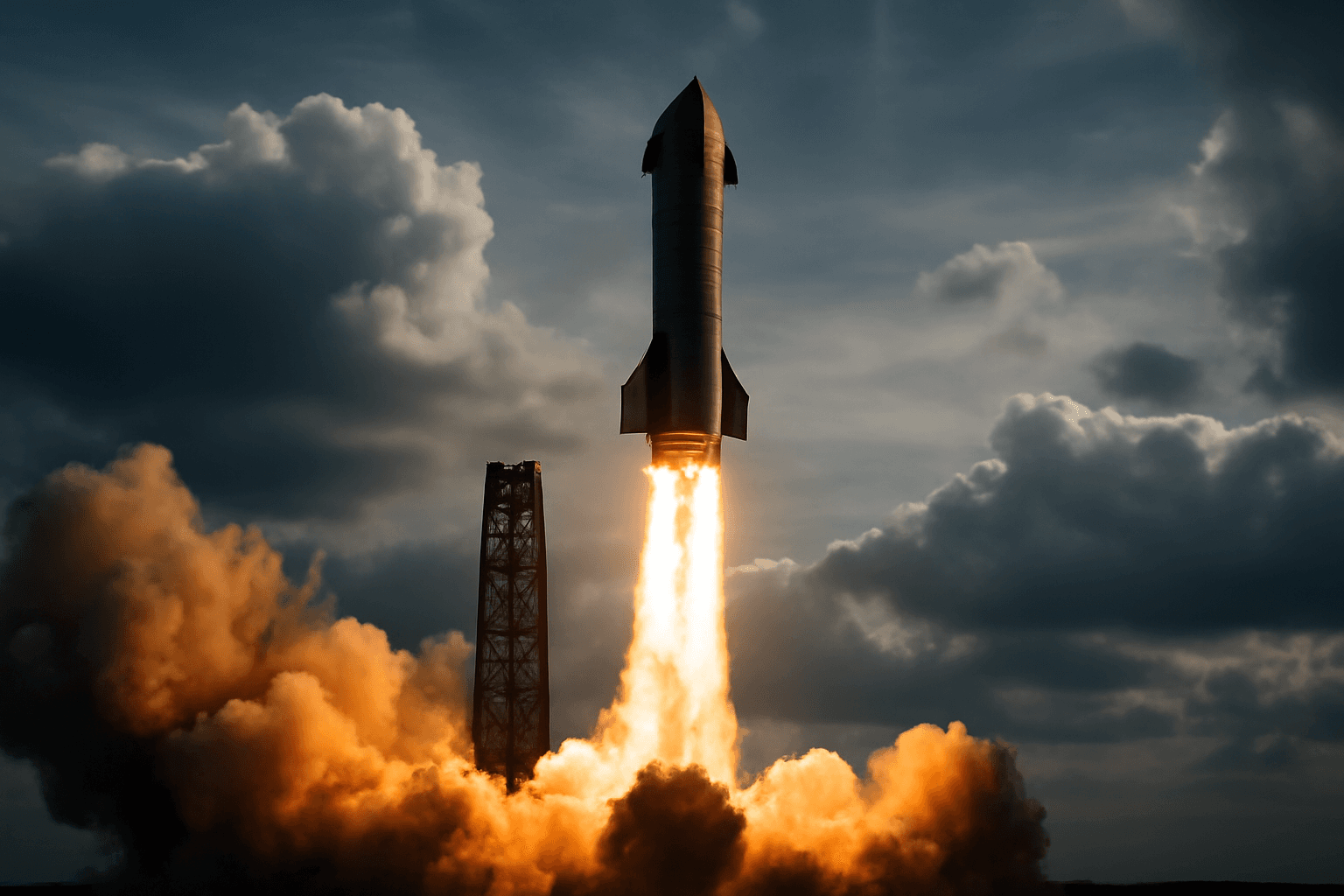
On August 5 at around 6:35 a.m. UTC, a spent SpaceX Falcon 9 upper stage is set to collide with the moon near Einstein Crater. This event offers astronomers a rare chance to observe a known object smashing into the lunar surface. The rocket stage, about 40 feet long, has been orbiting the Earth-moon system since January 2025 after launching Firefly Aerospace’s Blue Ghost and ispace’s Resilience landers.
The Impact and Its Aftermath
The Falcon 9 second stage will strike the moon at roughly 5,400 mph (8,700 kph). Since the moon lacks a substantial atmosphere, the hardware will hit the surface intact, releasing energy comparable to several tons of TNT. Predictions suggest the impact crater could reach up to 90 feet wide and 16 feet deep, but only spacecraft imagery will confirm this. The collision is also expected to eject a plume of lunar material between 15 and 20 kilometers high, with dust possibly spreading over 180 kilometers.
Visibility and Scientific Opportunity
The initial flash from the crash will be brief and likely too faint for the naked eye, but powerful telescopes might catch the dust plume lingering for minutes after impact. Observers in eastern North America and much of South America will have the best viewing angles, though sunlight and weather conditions may hamper observations. NASA’s Lunar Reconnaissance Orbiter and South Korea’s Danuri spacecraft are expected to capture before-and-after images to analyze the crater’s size and ejecta distribution.
This is informational content and does not constitute financial advice.