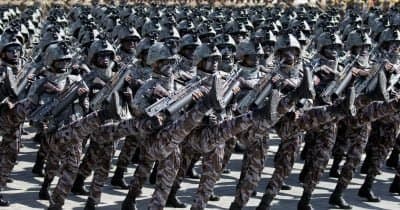
Russia is moving North Korean missile units directly into the Ukrainian theater. The deployment marks a sharp turn in how Moscow is prosecuting the war, shifting from covert ammunition purchases to openly stationing foreign weapons systems on the front. It signals Moscow and Pyongyang are no longer hiding their military marriage.
The collaboration runs deeper than troops or shells. Russia now relies on Pyongyang's ballistic capabilities to strike targets across Ukraine. Both countries formalized a strategic partnership treaty in 2024, but the actual cooperation has accelerated far beyond diplomatic language. North Korean supplies keep flowing into Russian arsenals, and now the personnel and hardware are arriving together.
The Numbers Behind the Shift
This is not a marginal resupply operation. A full missile unit deployment represents a significant commitment of North Korean military assets to the conflict. Russia has already been firing North Korean missiles at Ukrainian positions for months, but housing the launcher teams and support crews on Ukrainian soil changes the operational picture entirely. It compresses supply lines, reduces transit times, and ties Pyongyang's military more directly to battlefield outcomes.
Prediction markets are reading the move as a precursor to Russian territorial pushes, particularly toward cities like Sloviansk. The market calculus is straightforward: Russia does not deploy advanced foreign weapons systems unless it plans an aggressive campaign to justify the investment and exposure.
How Pyongyang Sees the Arrangement
North Korea gains invaluable combat data. Its missiles are being tested in a live conflict against NATO-supplied air defenses. Every intercept, every successful strike feeds back into Pyongyang's weapons development cycle. The partnership also deepens North Korea's strategic alignment with Russia, complicating any future negotiations over Korean peninsula tensions and potentially pulling Moscow into regional disputes involving South Korea.
For Russia, the calculus is simpler. North Korean production is vast, costs are rock-bottom, and Moscow faces no political pressure in Beijing or Washington that would constrain the relationship. As long as the ammunition flows and the missiles fly, the partnership works for both sides.
This article is for informational purposes and should not be construed as financial or investment advice. Military developments can impact market sentiment, but past correlations do not guarantee future outcomes.