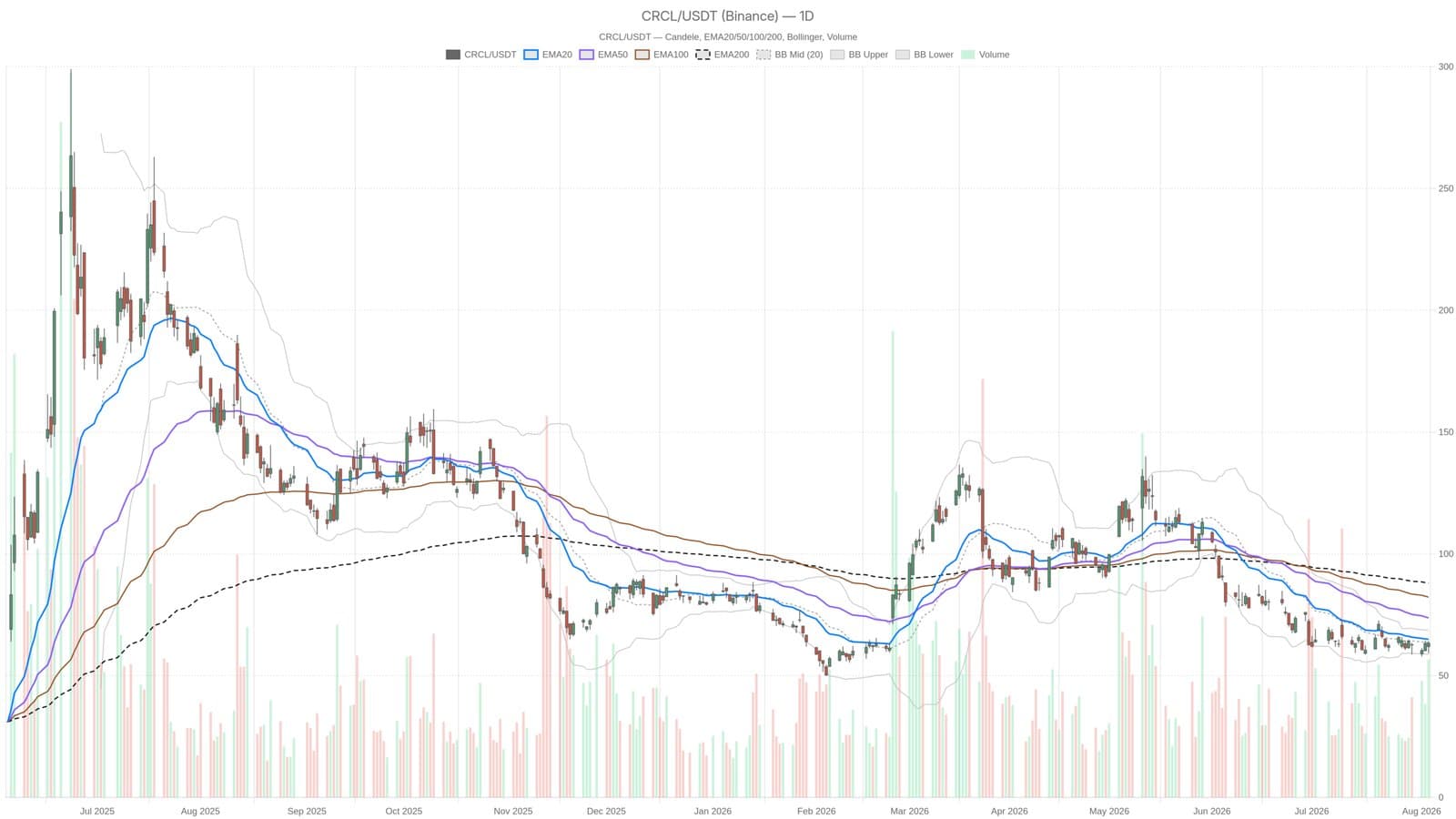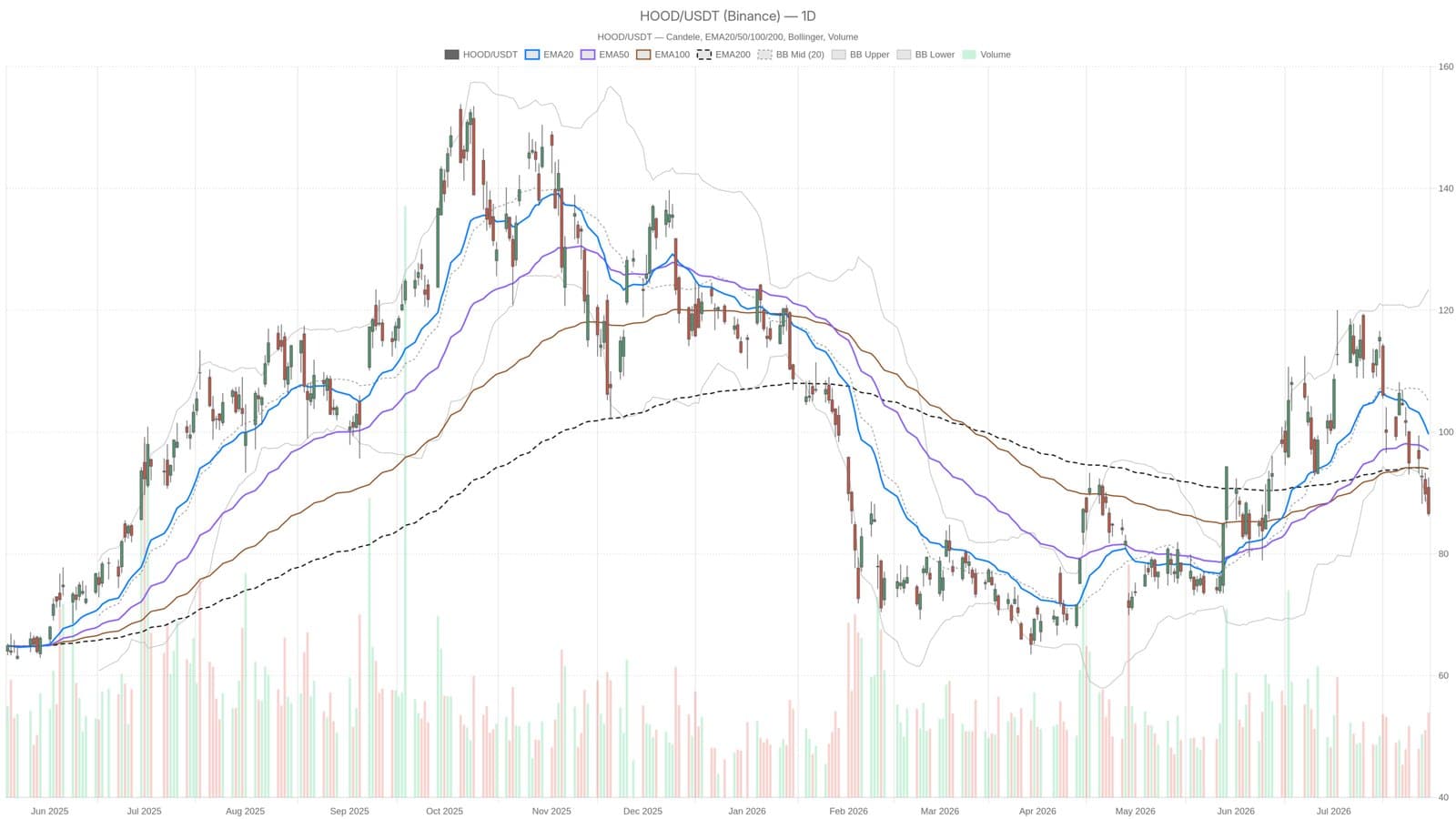
Robinhood's stock closed at $86.60 on July 30, dropping sharply after the company reported Q2 2026 earnings that beat expectations. Despite total revenues rising 32%, a steep 38% decline in crypto trading revenue to $100 million overshadowed the positive headline figures. Meanwhile, revenue from event contracts skyrocketed more than tenfold year-over-year, reaching $156 million and eclipsing crypto as Robinhood's leading revenue source.
Revenue Growth Masks Trouble in Core Crypto Segment
The surge in prediction markets revenue marks a significant shift in Robinhood's business mix. This segment’s growth to $156 million highlights the company’s strategy to diversify beyond its traditional crypto trading base, which has been weakening. However, the crypto segment's collapse raises questions about the durability of Robinhood’s revenue streams in a still-volatile market environment. Major banks including Goldman Sachs, Barclays, and Jefferies responded by cutting price targets on Robinhood stock, signaling skepticism about the sustainability of the current earnings momentum.
Technical Indicators Reveal Lingering Bearish Pressure
Technically, Robinhood's stock exhibits signs of selling pressure. The price closed below all key moving averages EMA20 at $99.66, EMA50 at $96.95, and EMA200 at $94.00 suggesting a persistent downtrend rather than a brief pullback. Momentum indicators back this up; the daily RSI sits at 36, nearing oversold levels but still indicating weak buying interest. The MACD histogram at -2.99 confirms accelerating downward momentum, making a recovery in the near term unlikely.
As analysts temper expectations and technical signals point downward, Robinhood faces an uphill battle to reassure investors while navigating the evolving revenue landscape. This comes amid broader market uncertainties where crypto trends remain volatile, echoing some of the challenges seen across fintech stocks in recent months.
This content is informative and does not constitute financial advice.