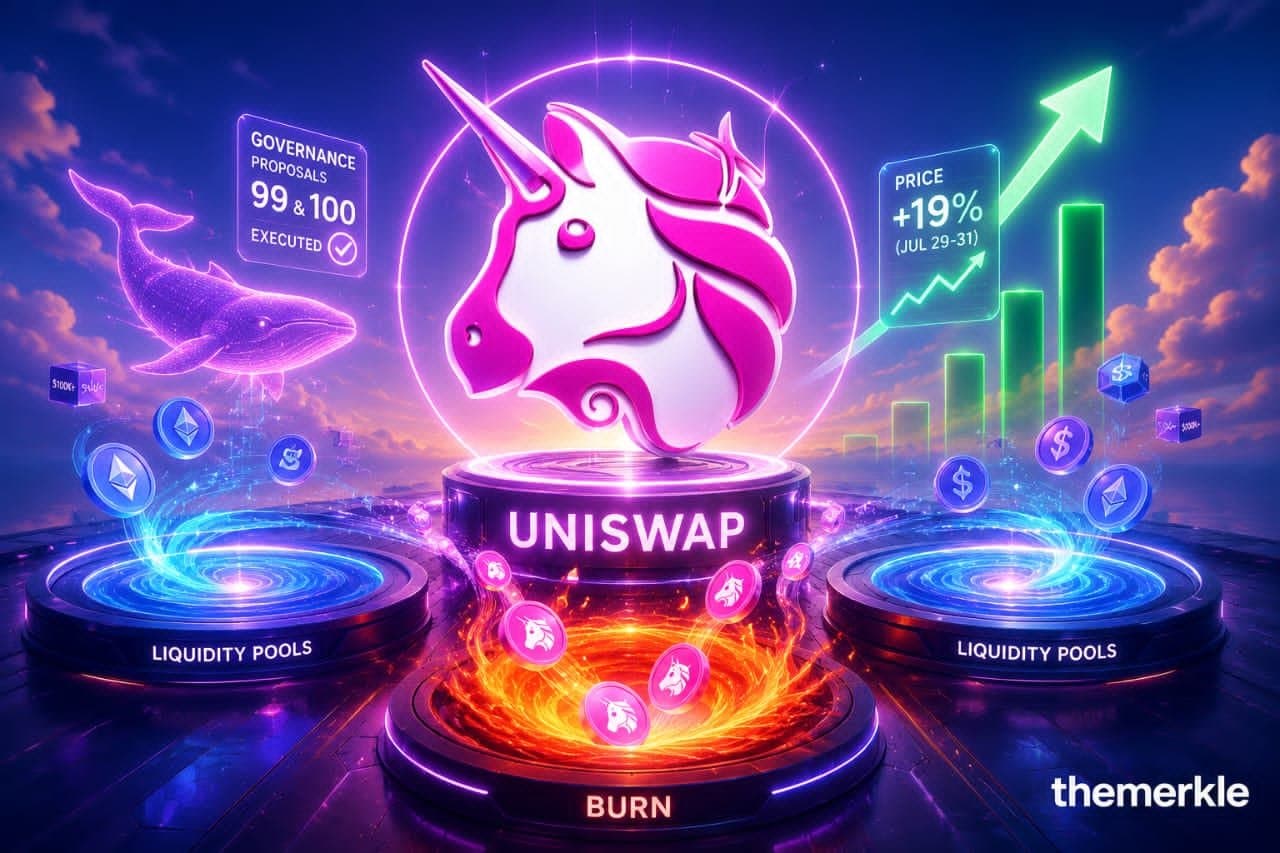
Uniswap's UNI token surged about 19% in late July, climbing from $3.83 to $4.54 within three days before retreating slightly. This spike coincided precisely with the execution of two major governance proposals that triggered a wave of new wallet activity and increased whale transactions.
Governance Decisions Drive UNI's Momentum
On July 27, Uniswap successfully passed two closely-timed on-chain governance votes: Proposal 99 and Proposal 100. Proposal 100 activated the v4 protocol fees across seven networks including Ethereum, Arbitrum, Base, BNB Chain, Polygon, OP Mainnet, and Robinhood Chain. Backed by a strong majority with over 46 million UNI votes for and just over 1 million against the measure set the stage for a structural change: revenues from fees would now be systematically used to burn UNI tokens. Proposal 99, which expanded protocol fees specifically on Robinhood Chain, was even more decisive, passing unanimously.
Market Reaction Reflects Greater Confidence
Following these implementations, various on-chain metrics surged alongside UNI’s price. Both daily active addresses and transactions from large holders, defined as those moving $100,000 or more, jumped above previous July baselines. the correlation between the governance execution and price move is unusually transparent far from the typical hype-driven rallies common in crypto. Early integration with Robinhood Chain helped kickstart fee generation, and market participants are watching upcoming approvals on five additional chains for sustained growth potential.
While most top cryptocurrencies treaded water in July, Uniswap’s strategy illustrated governance’s ability to directly influence token dynamics. Such clean on-chain links between protocol decisions and market response are rare, highlighting a maturing approach to decentralized governance.
This material is for informational purposes only and should not be considered financial advice.