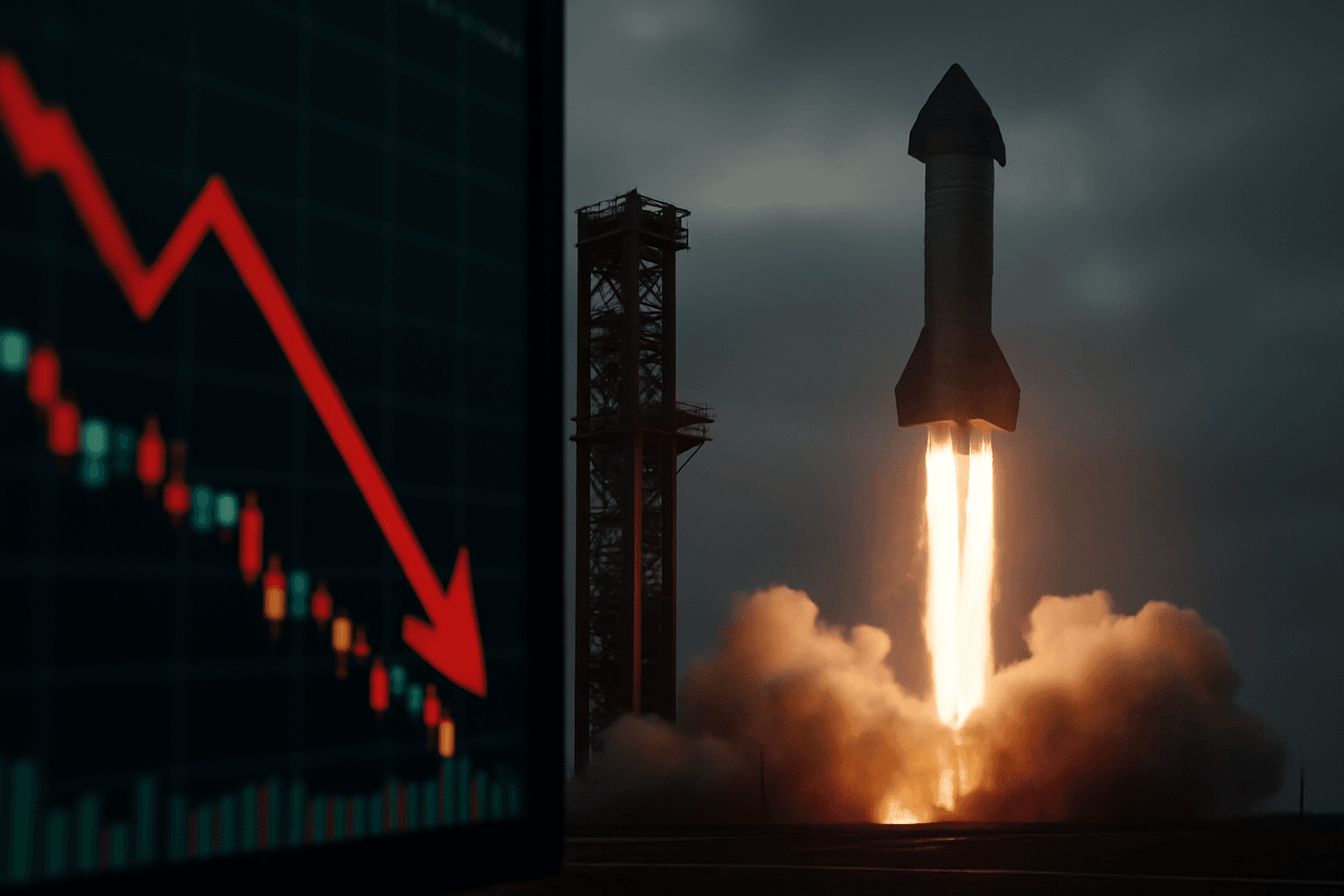
SpaceX’s stock has fallen sharply, continuing a downward trend with shares dropping 43% since mid-June and staying below their initial public offering price. This follows the 13th test flight of the Starship vehicle, which took place Friday at the company’s Starbase facility in Texas.
Launch Success Mixed With Engine Troubles
The Super Heavy booster separated from the Starship upper stage about two minutes after launch. Problems arose during the booster’s descent attempt when only some of its Raptor engines successfully reignited, causing an uncontrolled splashdown in the Gulf of Mexico. Despite this, the upper stage performed well, achieving a controlled ocean landing in the Indian Ocean without structural damage. Engineers gained valuable data and images of the intact thermal protection system after water impact.
The mission was notable for deploying 20 next-generation Starlink V3 satellites, marking their first operational flight. These satellites, built at SpaceX’s Redmond facility, feature larger solar arrays that generate twice the power of previous versions.
What This Means for SpaceX
Flight 13 was the second test of the upgraded Starship V3 model, the most powerful launch vehicle to date. While the booster’s engine issues highlight areas needing improvement, the successful orbital insertion of satellites signals progress in SpaceX’s satellite network expansion.
SPCX stock has seen declines in four of the last five weeks, reflecting investor concerns after the company’s recent IPO. The challenges faced during the latest mission could influence market sentiment as SpaceX works to refine its technology.
This content is for informational purposes and should not be considered financial advice.