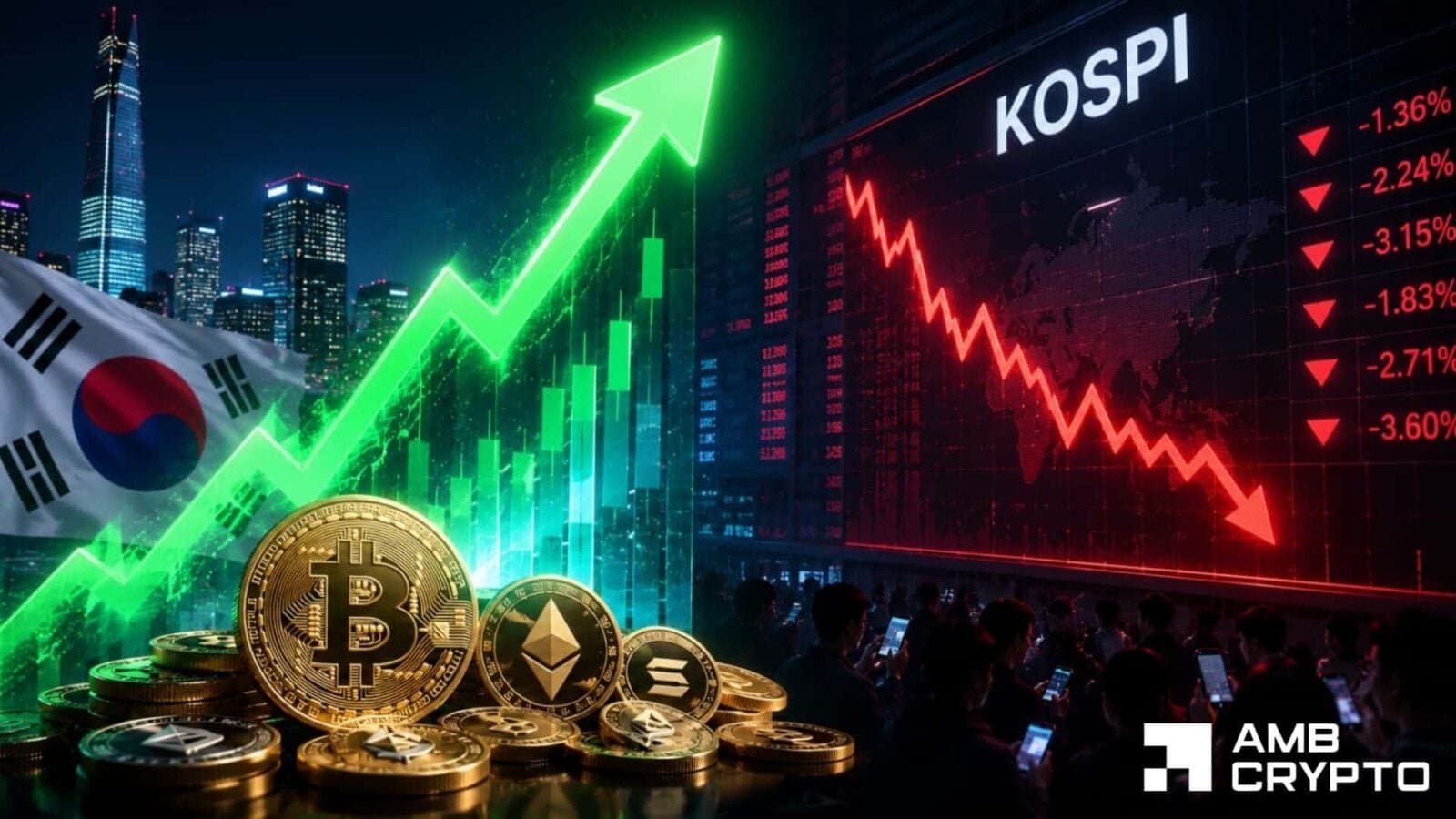
The volatility in South Korea's stock market sparked a massive 82% jump in cryptocurrency trading volume, hitting nearly $1 billion across major exchanges in late July. This unexpected surge highlighted how investors shifted their focus amid the KOSPI’s dramatic fall.
Crypto Trading Booms as KOSPI Plummets
Between July 23 and 28, the benchmark KOSPI index plunged over 20%, losing around 864 trillion won. Semiconductor stocks led the decline, triggering multiple circuit breakers in one of the steepest five-day sell-offs in recent history. As panic gripped the equity market, crypto trading on platforms such as Upbit and Bithumb exploded.
On Upbit, KRW-USDT pair volume rocketed by 600%, climbing from $20 million to nearly $140 million in a single day. Overall daily volume soared from $292.7 million to about $743 million before settling somewhat. Bithumb saw a 438% increase, reaching $436 million from $81 million, though this later eased to $144 million while remaining elevated compared to earlier in the week.
Drivers Behind The Surge: Flight or Margin Calls?
Market analysts debated the cause. Some suggested investors rotated capital from crashing stocks to crypto assets, betting on digital tokens as an alternative during extreme market stress. USDT’s rising liquidity reinforced this narrative. However, others pointed out that crypto activity might have reflected margin calls forcing sales or funds moving abroad to trade Korean equity derivatives, not straightforward stock-to-crypto capital migration.
This dual dynamic hints the volume spike was both a defensive move and a liquidity scramble rather than a wholesale shift to cryptocurrencies. The market’s complex interplay during the plunge showed how Korean investors react quickly, balancing risk and cash needs.
Stock Market Recovery May Press Crypto Volumes Down
Shortly after the turmoil, the KOSPI rebounded sharply, reclaiming much of its losses with an 18.27% rise by the end of July. Approximately 720 trillion won flowed back into equities, signaling sustained confidence in Korean stocks. If investors return fully to equities, we might see crypto trading retreating from its recent highs.
Still, the episode shows crypto’s role as a liquidity outlet during sudden shocks. Stablecoins like USDT became especially sought after, highlighted by Upbit’s ballooning KRW-USDT volumes. The speed and scale at which capital moved reveal the responsiveness of South Korea’s market participants to volatility.
This content is informational and does not constitute financial advice.