Samsung Electronics has secured a massive semiconductor deal worth more than $200 billion with Broadcom, focusing on supplying next-generation high-bandwidth memory and manufacturing AI chips using 2-nanometer technology.
Signed at an AI Summit in San Francisco on July 24, this memorandum of understanding (MOU) marks one of Samsung’s largest single-customer commitments to date. The agreement covers advanced memory products, specifically HBM4 and HBM4E memory types critical for the lightning-fast data processing required by AI accelerators.
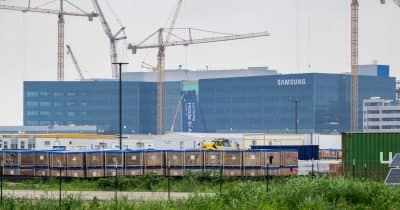
On top of memory supply, Samsung’s foundry in Pyeongtaek, South Korea, will handle the fabrication of Broadcom’s AI chips. This includes advanced packaging services that combine memory and logic components to optimize AI workloads efficiently. Samsung Foundry’s head Han Jin-man and Broadcom CEO Hock Tan witnessed the signing, locking the partnership through 2030.
Broadcom’s focus on designing custom AI ASICs has made it a key provider for hyperscalers like Google and Meta, which prefer purpose-built chips over generic GPUs. However, Broadcom lacks in-house manufacturing and memory production, making this partnership vital to gaining access to cutting-edge technologies and better supply chain resilience. Samsung’s Pyeongtaek facility already supports giants like Google, underlining its capacity.
This pact also fits within a larger US South Korea collaboration on semiconductor and AI infrastructure investments amounting to roughly $950 billion. It complements deals like the massive $500 billion memory partnership between SK Hynix and Nvidia. Samsung’s deal, in particular, strengthens its push against rival TSMC to become a leading player in advanced chipmaking.
For investors, this means a potential boost in Samsung’s semiconductor valuation, which has been held back by doubts surrounding its ability to compete at the forefront of chip manufacturing. Securing a decade-long commitment from Broadcom sends a strong signal about Samsung’s capabilities and future revenue streams.
The broad scale and timeline of this deal suggest a strategic play by Samsung to embed itself deeper into the AI hardware supply chain. It aligns with other high-profile collaborations shaping the AI chip landscape, like Nvidia’s extensive investments with SK Group and AI data center projects. Samsung’s move might redefine competitive dynamics in semiconductor manufacturing for years ahead.