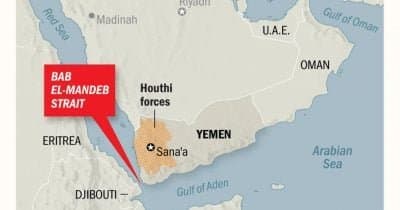
Imagine a single narrow passageway through which nearly 4 million barrels of oil pass daily. This is Bab el-Mandeb Strait, a chokepoint that connects the Red Sea to the Gulf of Aden. Now, picture the Houthi movement in Yemen threatening to disrupt this vital artery by targeting Saudi Arabia’s east-to-west oil pipeline nearby. Such moves could stall or reroute oil shipments, sparking ripple effects across global markets.
The Bab el-Mandeb Strait is a critical route for the seaborne transport of oil and containers heading from the Middle East to Asia and beyond. Any disruption here would force ships to take longer, costlier detours around Africa’s Cape of Good Hope. This would likely drive up shipping expenses and impact oil prices worldwide.
Market signals already reflect these concerns. Traders have adjusted WTI crude oil prices amid increased speculation about the strait's stability. Some sub-markets hint at a growing probability of supply disruptions. The Houthis' potential attack on Saudi pipelines complements fears of maritime blockades, making the prospect of halted oil flows more tangible.
Observers are keeping a close eye on developments involving the Houthi movement and possible Iranian naval activity in the area. Statements from Saudi Arabia, Iran, and the U.S. regarding the security of oil routes could sway market sentiment quickly. The end of August 2026 looms as a significant moment when traders will reassess risks tied to the Bab el-Mandeb Strait’s operation.
This situation reminds of past vulnerabilities in key shipping lanes, showing how regional conflicts can reverberate through global energy markets. Those tracking oil prices or involved in supply chains should stay alert as geopolitical tensions evolve.
This content is for informational purposes only and does not constitute financial advice.