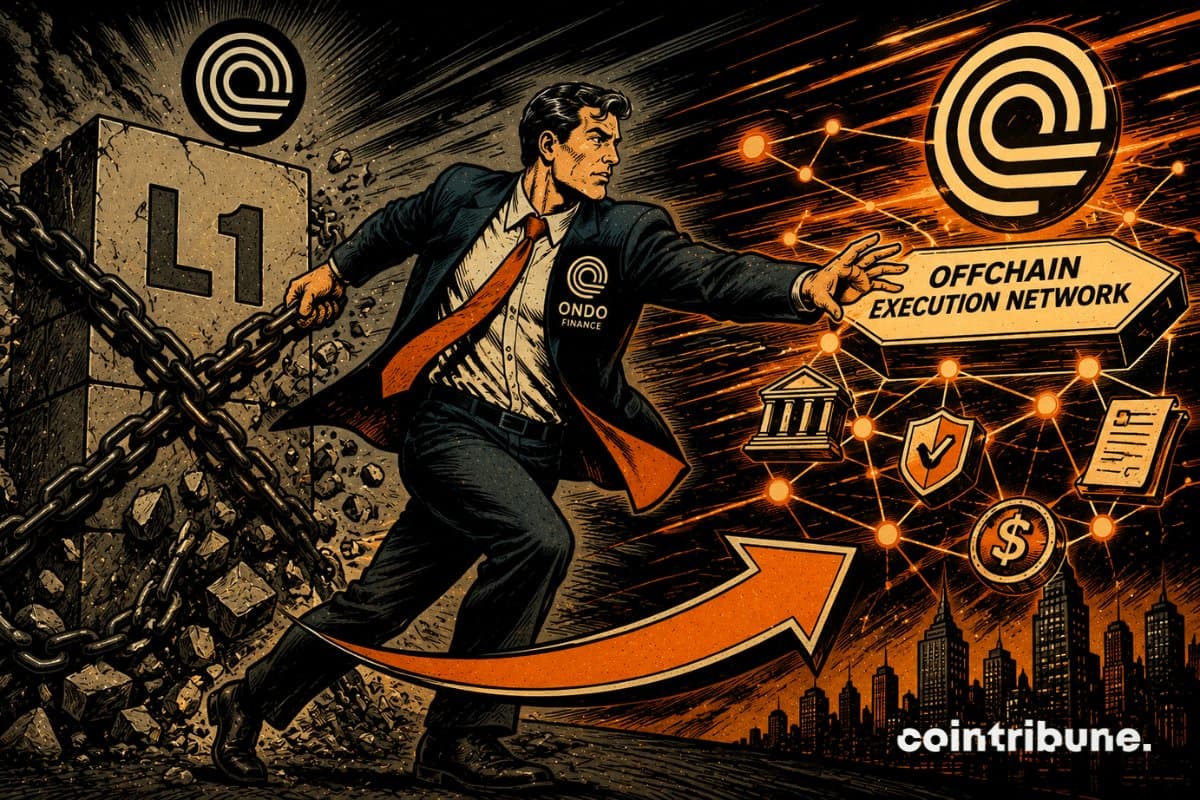
Ondo Finance shifted gears by launching Ondo Network on July 27, 2026, replacing its previously announced Ondo Chain layer-1 blockchain. The new protocol relies on offchain execution within secure Trusted Execution Environments instead of the traditional distributed validator nodes. This move comes barely 18 months after unveiling Ondo Chain in early 2025, signaling a fundamental rethink on the necessity of dedicated blockchains for tokenizing traditional financial assets.
From On-Chain to Offchain: A Strategic Shift
Ondo’s initial bet was on building a layer-1 blockchain to host tokenized institutional assets, with a proof of concept transaction involving JPMorgan and Chainlink settling tokenized US Treasury bills. That experiment demonstrated the technical feasibility of bridging traditional finance and blockchain. However, the company has now declared that running its own blockchain is "not necessary" and has transitioned to a system running transactions inside secure enclaves, or Trusted Execution Environments (TEE). These enclaves keep data encrypted and shield transaction processing from the host system, marking a departure from the consensus-driven validation model used by conventional blockchains.
Questions on Decentralization and Institutional Adoption
While final settlements still end up on public blockchains, Ondo has withheld details on the governance of its secure enclave operators, sparking debate about how decentralized the new system truly is. Ondo Perps, the perpetual futures platform for tokenized assets, is already live on this offchain infrastructure, enabling hedging and speculation before on-chain settlement concludes the process. This raises broader questions about whether institutional investors require full on-chain transparency and decentralization or if offchain solutions with strong security guarantees could suffice. The pivot also reflects a wider industry reconsideration of blockchain's role in traditional finance use cases.
material is informational and not financial advice