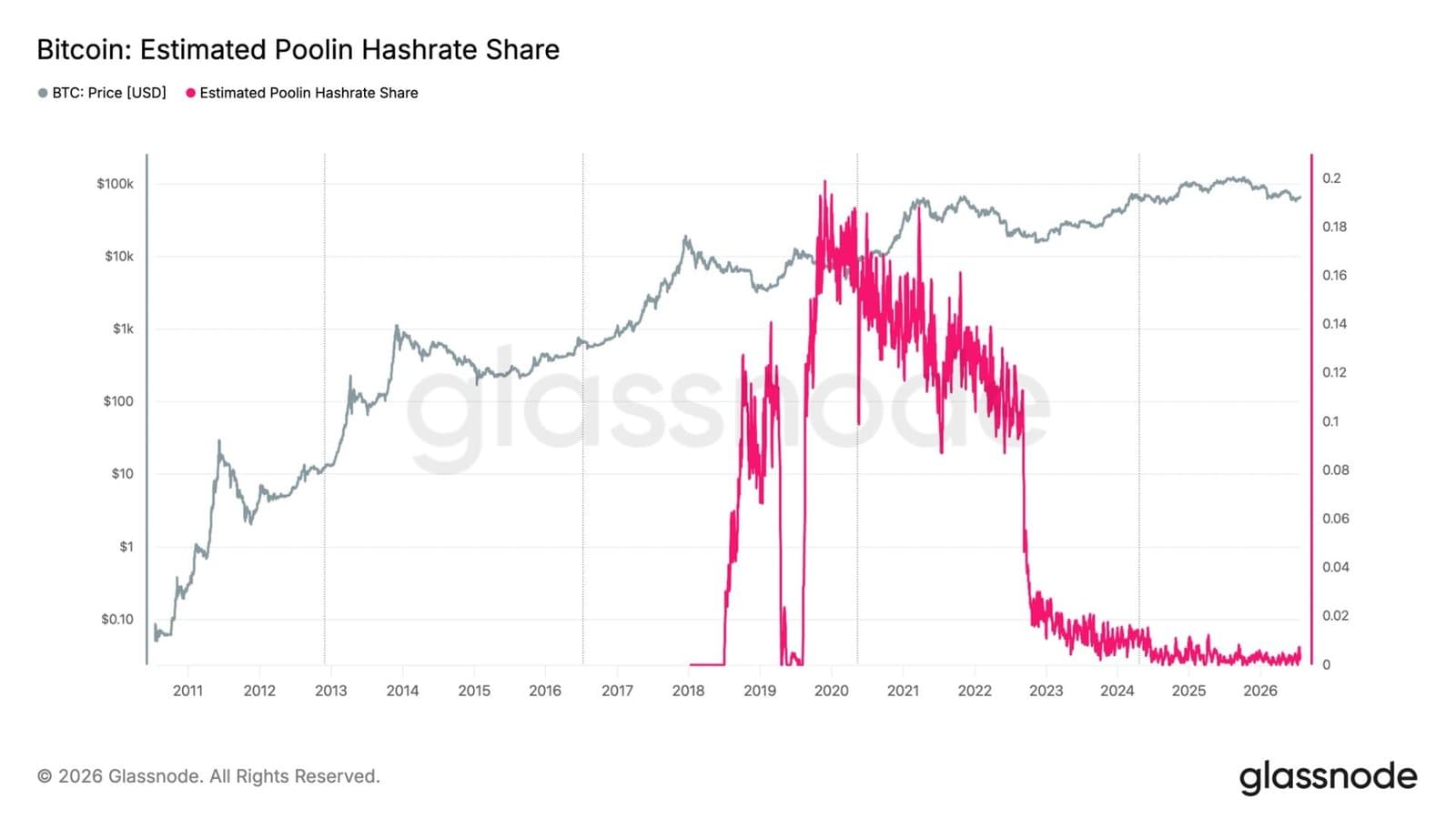
Poolin, which once managed close to 20% of Bitcoin's global mining power, has filed for bankruptcy after accumulating debts around $173 million. The Singapore-based company, once a dominant force in the bitcoin mining world, encountered a liquidity crisis that left thousands of customers locked out of their funds.
Facts Behind Poolin's Decline
Back in 2019, Poolin's share of the worldwide bitcoin hashrate hovered between 18% and 20%, making it the largest mining pool by far. However, the plunge in cryptocurrency markets during 2022 triggered liquidity crunches across several digital asset companies, including Poolin. Withdrawal delays were reported on the company’s Telegram channels as early as late 2022, signaling mounting difficulties.
Co-founder Kevin Pan openly admitted liquidity problems on WeChat but reassured users that their funds were safe. Despite these claims, withdrawals were completely halted in September 2022. At that point, Poolin issued IOU tokens worth approximately $163.7 million to 11,700 customers, which temporarily eased tensions but delayed real payouts.
Efforts to revive operations through expansion into Texas mining sites faltered due to delays in grid approval. The $52 million bid from Thor CALAP LLC for these mining sites is now the main hope for creditors seeking repayment. Poolin's current hashrate contribution has dwindled effectively to zero for years.
Community Response and Industry Impact
The bankruptcy notice filed in New Jersey on July 22 also includes two of Poolin's US affiliates, Lonestar Dream and Lonestar Taproot, with estimated liabilities ranging from $100 million to $500 million. The announcement has drawn attention from both customers and industry watchers, who see this as a major fallout in the bitcoin mining sector.
Users who held funds with Poolin remain largely frustrated by the freeze on withdrawals and the uncertainty surrounding recovery prospects. The stalled Texas mining project, once touted as a strategic move for regrowth, highlights the operational challenges mining firms face when expanding physical infrastructure. The market shift has also sparked conversations across crypto communities about the risks of centralized mining pools.
Poolin has yet to respond to further requests for comment regarding the bankruptcy filings. As global hashrate shares redistribute among other mining pools, this development marks the end of an era for one of bitcoin’s pioneering mining organizations.
This article is for informational purposes only and is not financial advice.