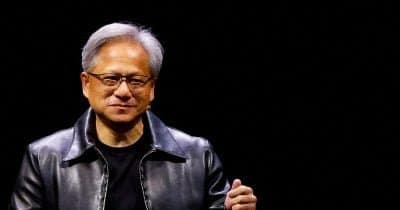
Jensen Huang, CEO of Nvidia, revealed a striking fact about the AI landscape: roughly half of all AI researchers worldwide are Chinese. His statement came during an event hosted by CSIS, emphasizing not just the sheer number but also the innovative output that China is generating in artificial intelligence.
According to Huang, China isn’t just leading in headcount. Around 70% of recent AI patents globally are attributed to Chinese institutions. To put it simply, seven out of every ten new AI patents come from China, underscoring the country’s expansive and dynamic AI ecosystem. Huang described it as “vibrant, rich, and incredibly innovative,” signaling a solid environment that continuously pushes the boundaries of AI development.
In an interview with Axios on July 22, 2026, Huang urged U.S. companies to tap into Chinese open-source AI models. This is a notable position, especially given Nvidia’s central role in U.S.-China technology tensions and the complex web of export controls and political pressures the company faces. Open-source Chinese AI projects have gained traction, and Huang believes American firms should embrace these resources rather than avoid them due to geopolitical concerns.
His remarks also highlighted a critical gap in the U.S. workforce: the supply of AI talent is not growing fast enough to meet the rapid industry demands. Huang pushed for serious investment in retraining and expanding domestic talent pipelines. Without this, the U.S. risks falling behind in what is quickly becoming a global race.
Huang’s call for enhanced cooperation between U.S. and Chinese researchers on AI safety standards stresses the risks of fragmented regulations. If the largest AI economies fail to align on safety protocols, businesses operating across borders could face significant challenges.
Investors may find the open-source angle especially compelling. Increased collaboration and adoption of Chinese AI models in the U.S. could reshape competitive dynamics and unlock new innovation pathways.
The news sent Nvidia shares on a mild wobble, reflecting investor uncertainty amid the ongoing complexities in U.S.-China tech relations.