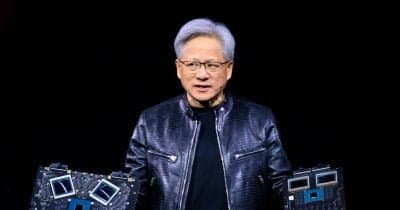
Nvidia’s CEO Jensen Huang is calling out the growing fear-based approach to AI regulation in Washington. In an Axios interview on July 23, 2026, Huang dismissed the idea that AI poses an existential risk or will eliminate half of U.S. jobs as "complete nonsense." His message was crystal clear: lawmakers should stop making decisions based on sci-fi scenarios.
Joint Industry Appeal for Balanced AI Policies
The day after the interview, Huang shared a joint letter on X, signed by Nvidia, Microsoft, Meta, and Palantir. This letter pushed for the continued advancement of both closed and open-weight AI models, signaling a united front from key tech players.
Its timing wasn't accidental; Washington is wrestling with how to respond to rising Chinese AI competitors like Moonshot AI’s Kimi while also trying to speed up America’s own AI deployment. Huang positioned himself between extremes rejecting both reckless expansion and overly harsh restrictions.
He urged policymakers to expand their consultation pool beyond a few executives who, according to him, benefit from stoking fear as part of their strategy. This industry coordination hints at a shift in how regulation debates may evolve.
Nvidia’s Geopolitical Tightrope
Nvidia’s role is key. Its GPUs are vital for AI training worldwide, so every export rule, compliance change, or policy adjustment directly affects Nvidia’s ability to do business globally. Huang acknowledged personnel from the Trump administration like Susie Wiles and Howard Lutnick for their sensible approaches but criticized blanket views that label AI as inherently dangerous.
On national security, Huang called for targeted policies rather than broad restrictions, emphasizing that sweeping export controls could hobble U.S. competitiveness without truly slowing down China, where native AI development is rapidly ramping up.
The rapid progress of technologies like Kimi adds pressure to the debate, raising doubts about whether U.S. policies are practical or just relocating innovation overseas.
The competition with Chinese AI models is reshaping what policymakers consider critical, making Huang’s voice especially important as the industry pushes back against fear-driven regulation.