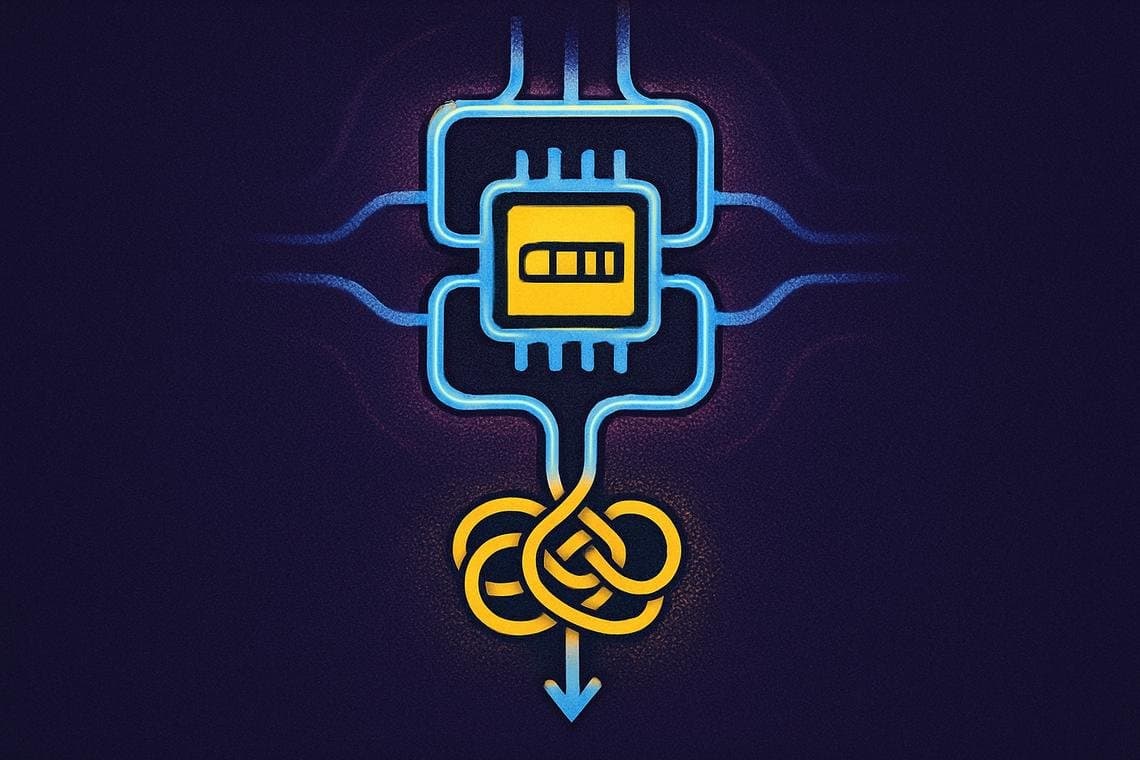
Researcher Diego Saldaña Ulloa’s recent paper highlights a fundamental difference between how large language models (LLMs) and the human brain process reading and writing. Published on arXiv in July 2026, the study reveals that while our brains use separate neural pathways for reading and writing, LLMs like GPT-2, OPT, and Pythia fuse these functions into a single mechanism.
In humans, reading and writing are doubly dissociable systems. Clinical cases such as pure alexia and pure agraphia demonstrate that damage to one function doesn’t necessarily impair the other. This separation is traced to distinct neural routes: a ventral decoding path for reading and a fronto-parietal encoding route for writing. Such an arrangement reflects evolutionary adaptations for the unique cognitive demands of these tasks.
LLMs Share Codes for Reading and Writing
By contrast, decoder-only models handle input and output through one autoregressive pathway, intertwining the codes for reading and writing. The study introduces an entanglement index ranging from 0.23 to 0.35, which indicates partial but incomplete code sharing. Output codes within these models diverge about three times more than input codes as word frequency changes, suggesting asymmetric specialization despite the shared pathway.
Significantly, this fusion results in behavioral coupling between comprehension and production that is strong and statistically significant across all twelve tested LLMs, reversing the pattern observed in human cognition. This finding challenges assumptions about AI’s architecture and could influence future model designs.