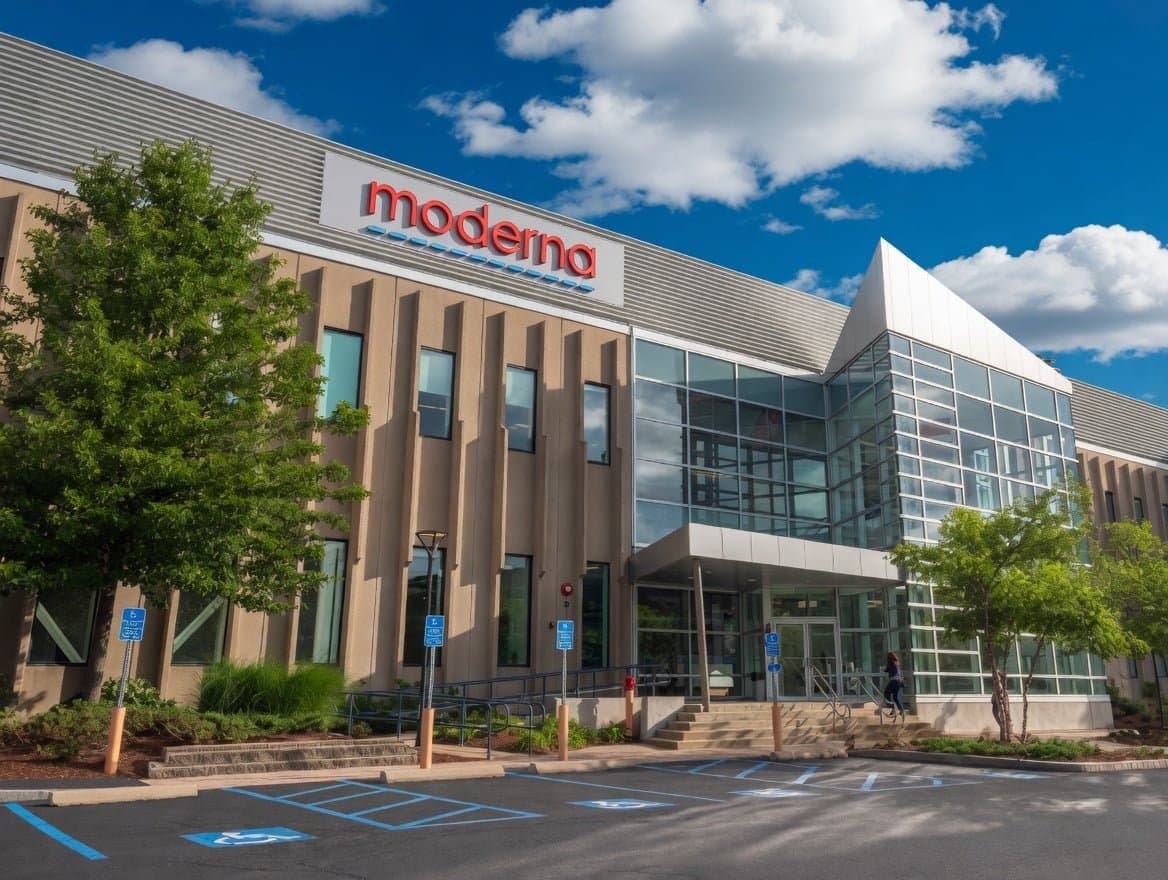
Moderna's stock jumped 4.37% to $57.55 after the company dosed its first participants in a Phase 1 study of mRNA-1469, a vaccine targeting Bundibugyo ebolavirus. Health Canada cleared the trial, marking the first time this mRNA platform gets tested in humans against this particular Ebola strain. About 80 healthy adults will participate across three Canadian sites, with researchers measuring safety, tolerability, and immune responses.
The vaccine candidate sits on the same messenger RNA technology that powered Moderna's COVID-19 shots. The company built on years of filovirus research and earlier work with other Ebola strains to accelerate the jump from lab to clinic. What makes this move significant is that no licensed vaccine exists for Bundibugyo disease right now. Existing shots target Zaire ebolavirus, a different strain entirely.
Funding and manufacturing run in parallel
CEPI committed up to $50 million to fund preclinical work, the Phase 1 trial, and production of extra clinical doses. That parallel manufacturing setup means Moderna can scale quickly if early results look promising, cutting the usual timeline for moving into larger studies. The company plans to use Phase 1 data to shape Phase 2 and Phase 3 designs.
Access commitment for lower-income markets
Moderna pledged to reserve at least 500,000 doses for lower-income and middle-income countries once the vaccine receives approval. Those doses will be offered under access pricing, addressing a gap where most vulnerable populations often lack preventive options. The agreement also covers supply logistics during ongoing development, so manufacturing doesn't become a bottleneck later.
This article is informational only and should not be construed as financial or medical advice. Always consult qualified professionals before making investment or health decisions.