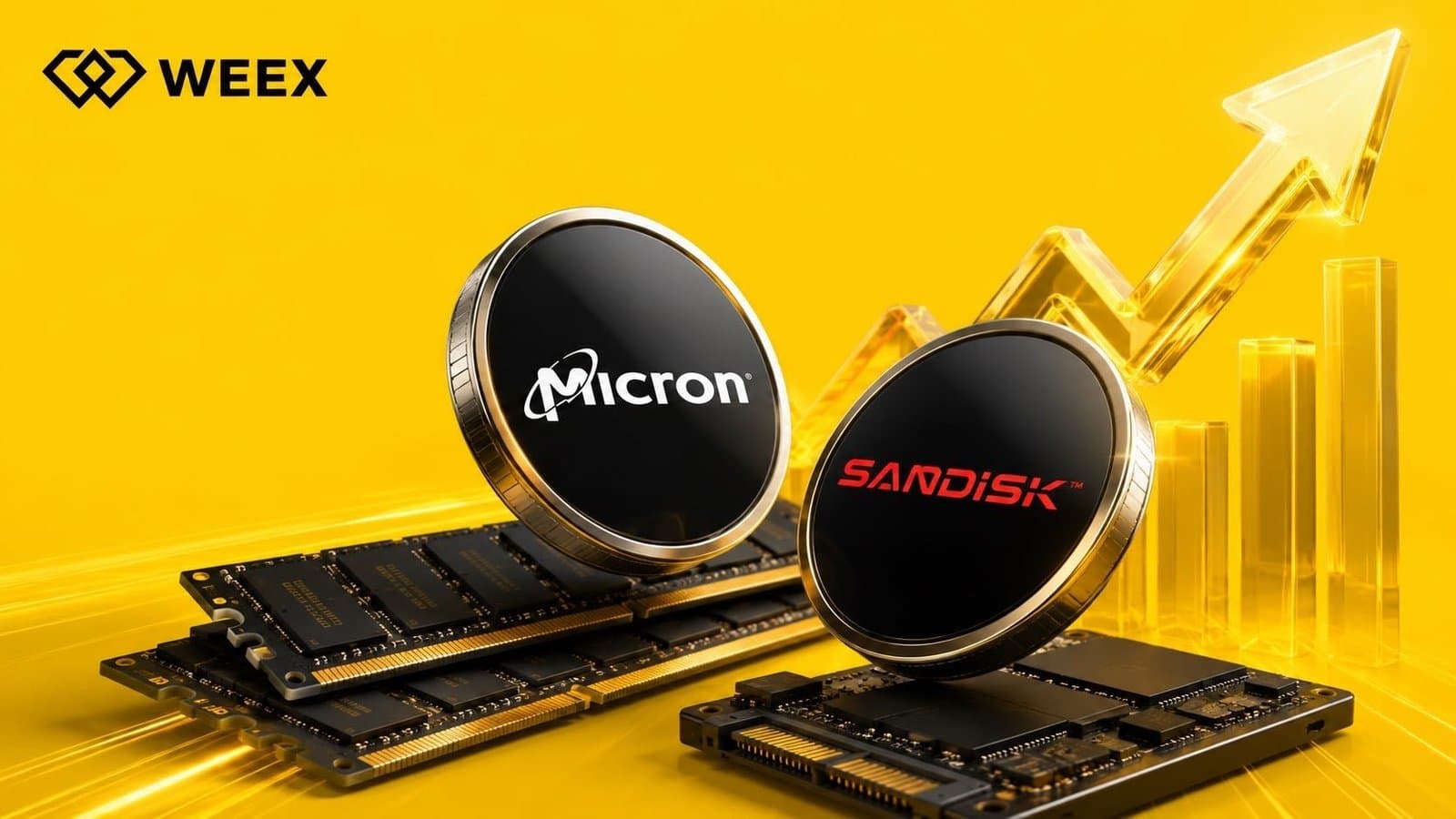
Singapore, July 27, 2026. Micron Technology and SanDisk shares have shot up dramatically this year amid soaring DRAM and NAND prices fueled by AI demand. Micron climbed about 230% year-to-date, trading near $921, while SanDisk surged roughly 570%, reaching around $1,590 as of July 24.
The booming memory chip sector owes its rise to a widening supply shortage. Deutsche Bank forecasts a 10% DRAM deficit this year, expanding to nearly 30% by 2028, with tight supply expected through 2030. High bandwidth memory (HBM) is the main growth driver. Micron's HBM4 is now in volume production, and SanDisk has secured deals with major cloud providers, supporting substantial revenue gains: Micron reported 346% revenue growth year-over-year, SanDisk’s datacenter revenue jumped 645%.
WEEX, a global digital asset exchange launched in 2018, is tapping into this momentum by offering perpetual futures for MU and SNDK, plus DRAM spot trading, all settled in USDT. These instruments come with up to 100x use and allow traders to go long or short around the clock, removing the usual barriers of U.S. market hours and brokerage accounts.
Accessing the Memory Rally 24/7
By tokenizing stocks, WEEX enables retail traders to join the memory chip rally without traditional hurdles. Users can trade MU/USDT and SNDK/USDT futures or take positions in DRAM spot markets, with continuous availability. However, caution is advised: both stocks have experienced recent pullbacks, with Micron down about 8% and SanDisk roughly 16% over the last month. Leveraged tokenized positions amplify volatility and liquidation risks.
Memory chip prices and shares have become one of 2026’s most notable macro trades, driven largely by AI’s insatiable appetite for faster, larger storage solutions. WEEX’s offering opens the door for wider participation in this trend while highlighting the inherent risks of such a volatile sector.
This material is for informational purposes only and does not constitute financial advice. Leveraged trading involves significant risks including potential total loss of capital.