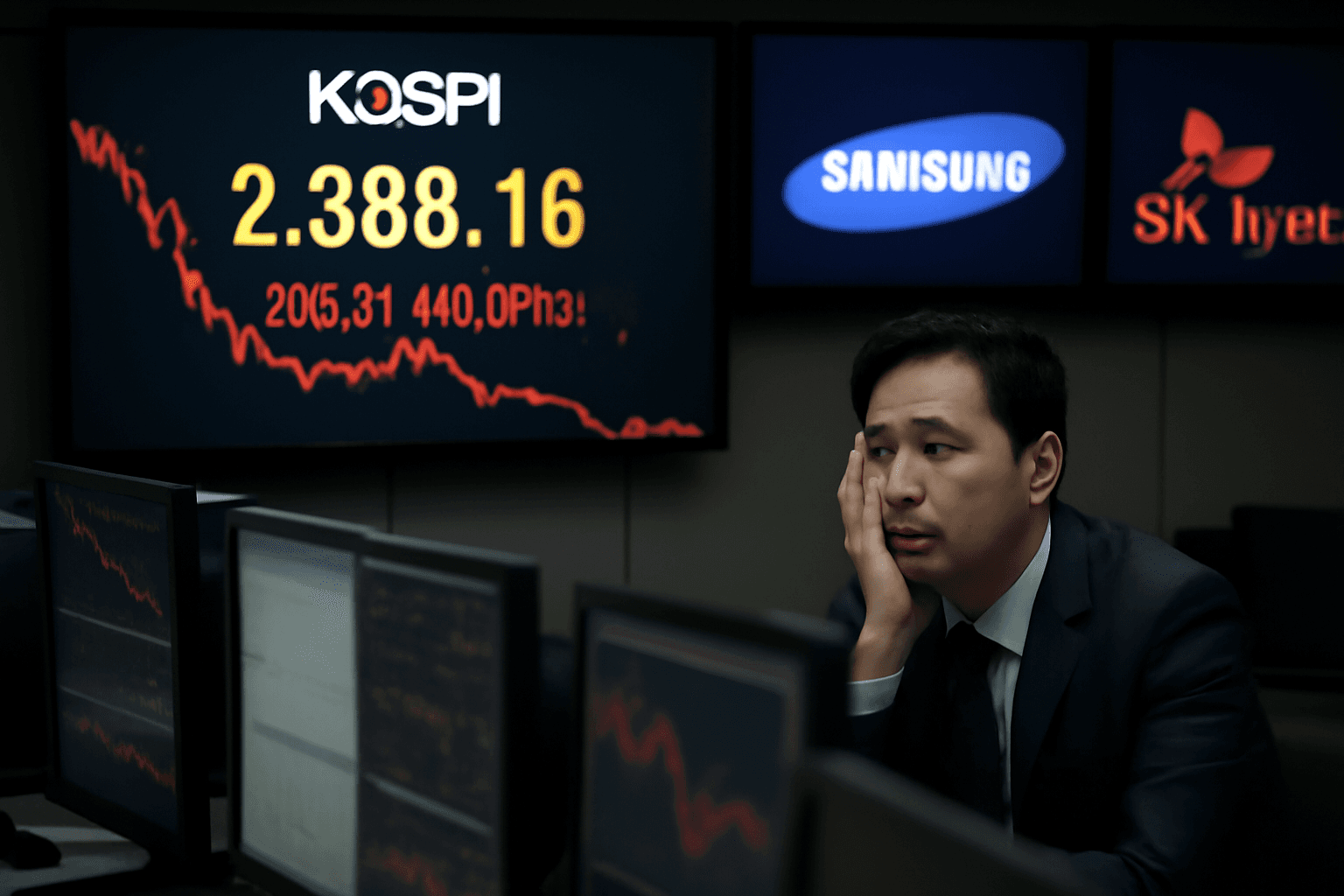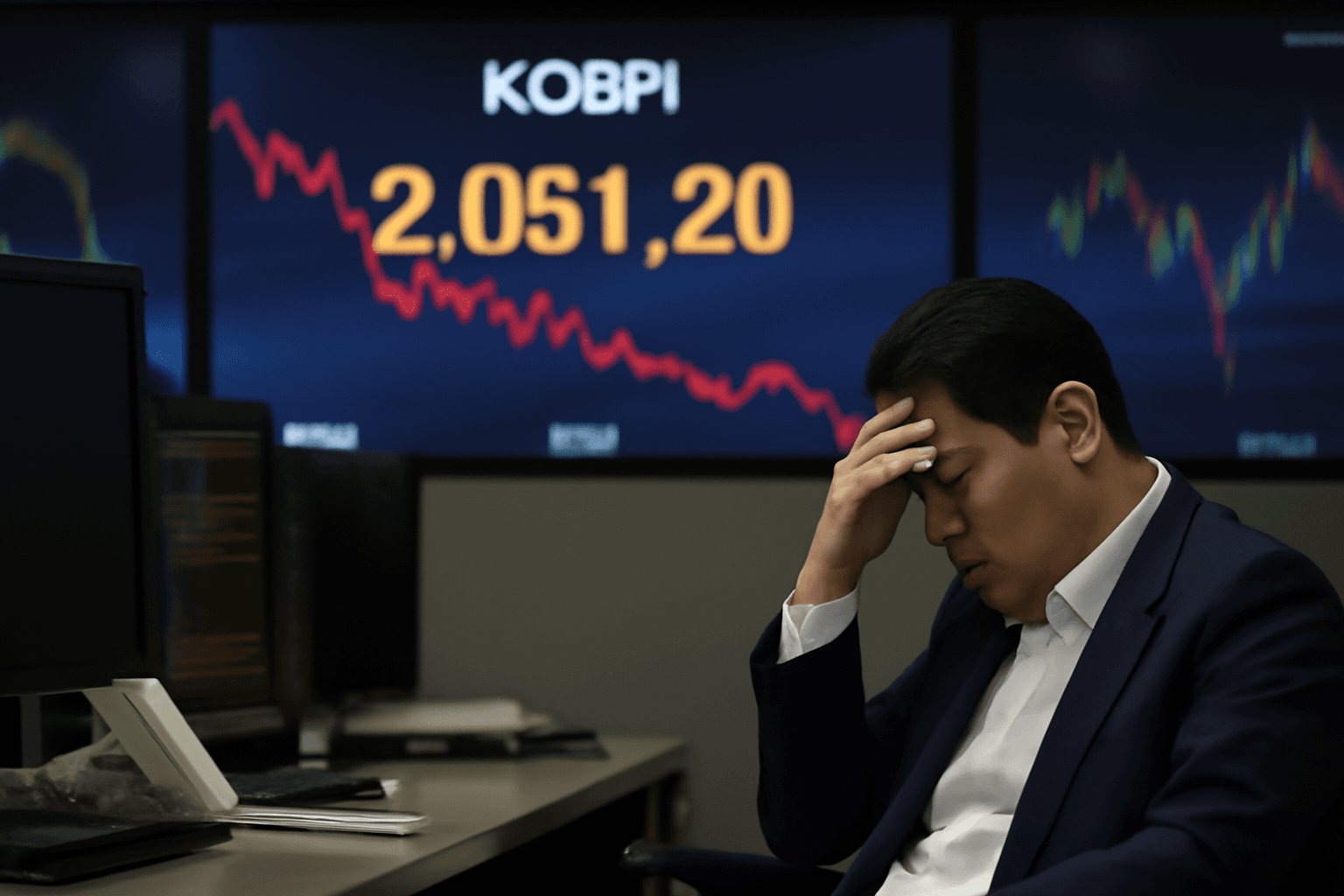
The KOSPI index plunged more than 8% on July 28, triggering an automatic 20-minute trading halt on South Korea’s main stock exchange. The Level 1 circuit breaker activated at 10:13 a.m. local time after the index fell 8.02% to 6,213.51 and remained below that threshold for one full minute.
Once trading resumed, selling pressure intensified. By 11:20 a.m., the KOSPI was down 8.59% at 6,175.71, and it extended its losses to roughly 9.4% around midday, according to Reuters. This marked the eighth time in 2026 that the KOSPI circuit breaker has been triggered, highlighting the heightened volatility that has gripped South Korean equities this year.
The trading suspension stopped all KOSPI-listed shares from trading and accepting orders for 20 minutes, followed by a 10-minute single-price call auction to reopen the market. Earlier in the session, “sidecar” mechanisms paused program trading temporarily as futures and cash markets tumbled. Unlike the circuit breaker, which halts most trading, sidecars specifically halt automated program trades to reduce volatility.
SK Hynix, a heavy index component, saw its Nasdaq-listed American Depositary Receipts (ADRs) fall sharply. The ADR closed at $143.02, down 7.5% and below its $149 offering price for the first time since July, dipping as low as $139.10 intraday. This decline comes ahead of SK Hynix’s earnings report expected on July 29 and follows a recent U.S. ADR offering where 177.9 million shares were priced at $149 each.
The recent swings in the KOSPI are partly driven by margin calls and high retail use, with major players like Samsung Electronics and SK Hynix exerting outsized influence on the market. Volatility has surged since June, intensifying the pressure as investors adjust positions.