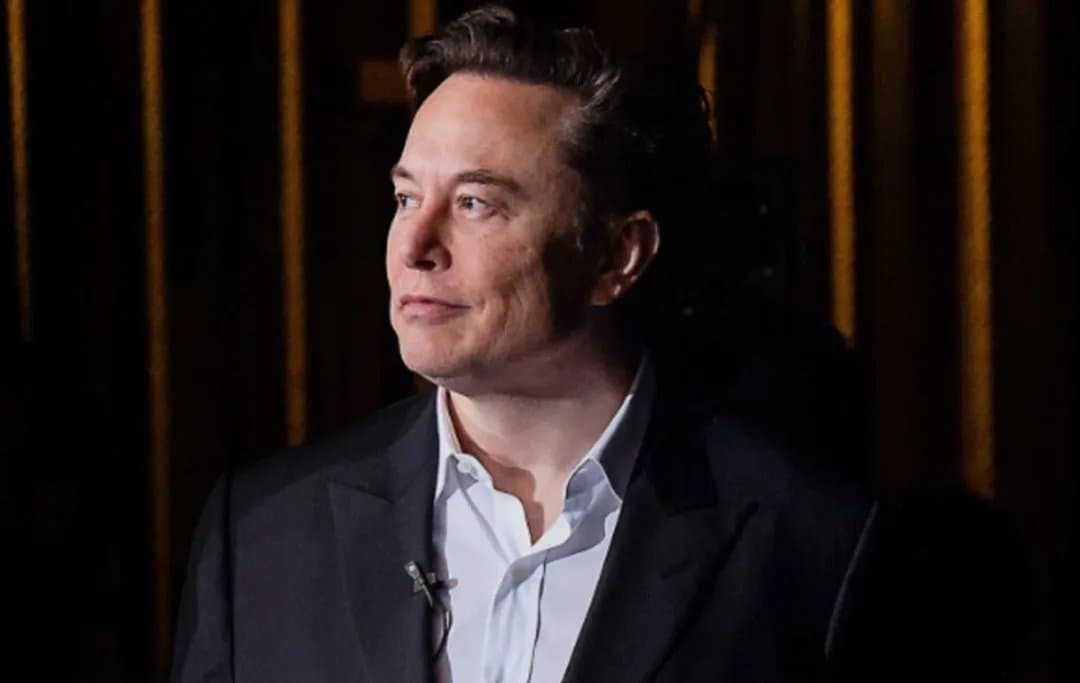
Elon Musk envisions a world by 2036 where traditional money could become nearly obsolete, as artificial intelligence and robotics drive an unprecedented level of abundance. In a discussion with The Economist’s editor-in-chief Zanny Minton Beddoes, Musk argued that money today serves mainly as a means to acquire goods and services like food, housing, and transportation. However, he suggested that the rapid advances in AI and automated production might push society into a state where resources are so plentiful that the scarcity money addresses no longer applies.
Musk pointed out that if robots can efficiently and cheaply manufacture essentials on a massive scale, the need for money as a medium of exchange could significantly diminish. His idea rests on the assumption that machines will soon handle most production tasks, creating more goods and services than people can consume.
This prediction came amid ongoing challenges in the cryptocurrency space, particularly for Bitcoin, which has faced volatility and price drops below $65,000 earlier this year. Musk’s forecast raises complex questions about the future of all currencies, including digital ones like Bitcoin. While widespread abundance might decrease the demand for traditional money, Bitcoin's fixed supply and decentralized nature could still offer value as a store of wealth or a means to transfer value outside government control.
Interestingly, Musk has previously highlighted energy as the core foundation of money, noting that unlike fiat currencies that governments can print, energy and computational power cannot be fabricated. This view aligns with some crypto supporters who see Bitcoin mining’s energy consumption as tying the digital asset to physical resources. Musk’s companies Tesla and SpaceX hold significant Bitcoin reserves: SpaceX owns about 18,712 BTC, and Tesla holds 11,509 BTC. At current prices near $65,000 per coin, their combined holdings approach $2 billion.
As AI and robotics evolve, the economic landscape might shift dramatically, impacting how money functions and what form it takes. Meanwhile, Bitcoin and other cryptocurrencies continue navigating their own uncertain trajectories amid these broader technological changes.