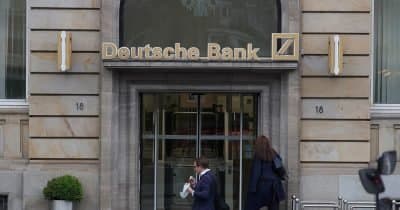
Deutsche Bank just slashed its gold price target by 22%, bringing Q3 2026 expectations down to $4,300 per ounce from $5,500. The move looks bearish at first glance. Then you notice the bank's own range, $4,300 to $4,800, implies fair value around $4,700. That's still double what gold traded for five years ago. Something doesn't add up until you read the fine print.
The commodity team, led by analyst Michael Hsueh, made the cut on June 23. Gold had rocketed to $5,110 earlier in 2026, touched $5,405, then tumbled back to $4,000-$4,100. Higher real yields from Federal Reserve tightening squeeze gold, which pays zero interest. When bonds offer decent returns, investors stop hoarding metal. That's the bear case. Deutsche Bank even sketched a floor at $3,800 if the Fed raises rates three or four more times.
But here's where it gets interesting. The bank isn't betting on that scenario. It still sees a path to $6,000 per ounce in 2026, a forecast it published January 27. Same analysts, same bank, same year. Two completely different endpoints.
Central Banks Are the Real Story
The difference comes down to one word: central banks. Not retail traders. Not ETF flows. Sovereign buyers are vacuuming up gold at a pace that dwarfs historical averages. Poland, Uzbekistan, and China alone purchased 244 tonnes in Q1 2026. That quarterly haul outpaces typical yearly demand from institutional buyers.
This structural demand doesn't disappear because CNBC anchors fret about rate hikes. Central banks buy gold to diversify away from dollars, to hedge currency risk, to signal financial independence. They don't trade on sentiment or technical bounces. When China, Russia, and others all decide gold matters, price targets become secondary to the question of whether there's enough supply.
Meanwhile, retail and ETF demand has softened. Policy shifts in India, a major buyer, shifted sentiment. The divergence is stark. Institutional money flows one direction. Central bank accumulation flows another. Deutsche Bank's real message isn't about whether gold hits $4,700 or $6,000. It's that the underlying structure supporting higher prices remains intact, even if the near-term path gets messy.
This analysis is for information purposes only and should not be construed as financial or investment advice. Always conduct your own research and consult with a qualified advisor before making trading decisions.