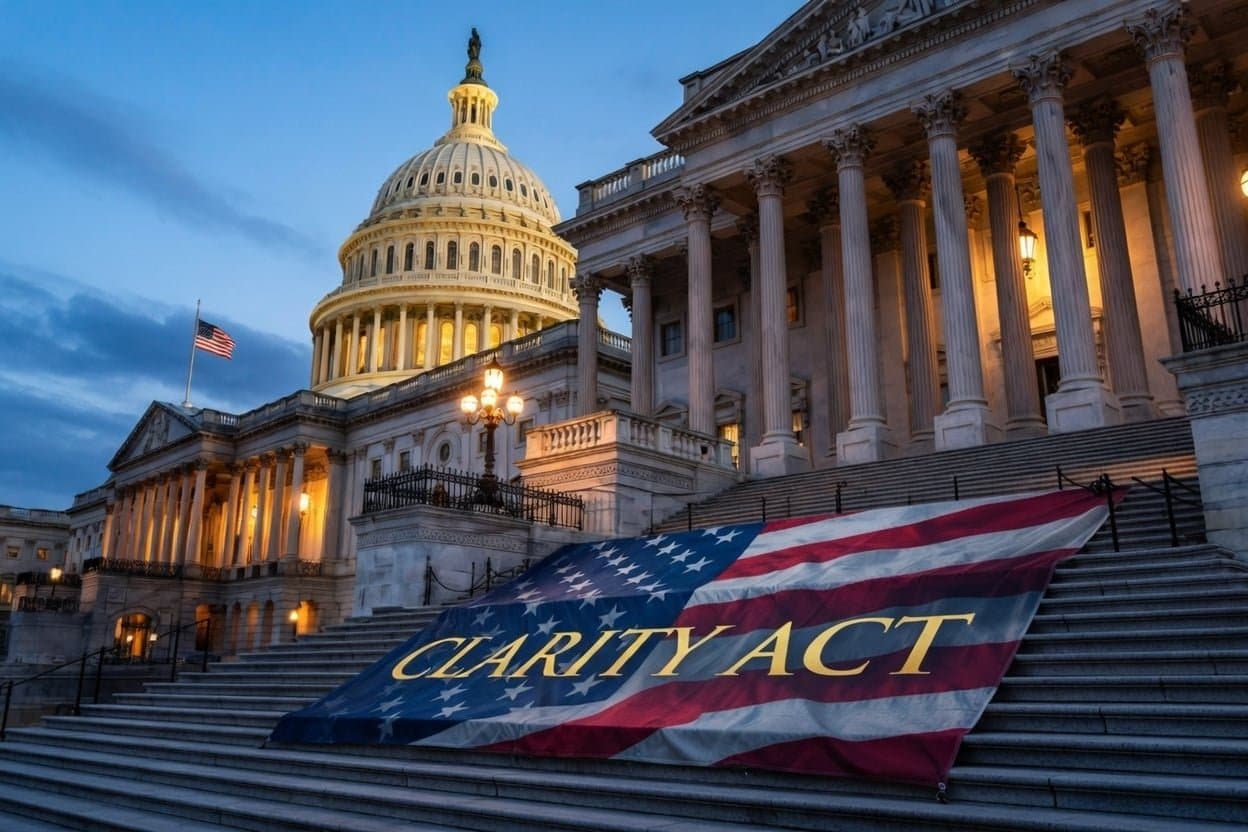
Brian Armstrong is making his move. The Coinbase CEO threw his weight behind the Clarity Act this week, pushing senators to vote on the first real federal framework for regulating crypto before lawmakers head home for August. It's a key moment, the kind that shapes whether American crypto companies stay put or flee overseas.
Armstrong's pitch is straightforward. Clear rules protect consumers, he says. They give law enforcement better tools to track bad actors. And they let banks get comfortable offering stablecoin and crypto services without tiptoeing around vague regulations. The Senate vote, he argued, will show which lawmakers actually support sensible policy instead of just talking about it.
The pushback is real
Not everyone's cheering. The National Sheriffs' Association came out swinging, worried the bill goes too soft on decentralized finance and anti-money laundering enforcement. They want Congress to narrow those DeFi provisions before anything passes. The Blockchain Association fired back with a letter to Senate Majority Leader John Thune and Minority Leader Chuck Schumer, arguing the Clarity Act doesn't weaken law enforcement at all. The compliance requirements for crypto intermediaries stay intact, they say.
The timing matters here. Senate leaders are expected to hold a procedural vote before the recess kicks in, meaning there's a narrow window to get this across the finish line. Armstrong's public backing signals Coinbase sees this as the moment to push.
What's actually in the bill
The Clarity Act would carve out the first full federal rulebook for the U.S. crypto industry. After years of patchwork regulation and industry groups begging for clarity, this bill attempts to do what regulators couldn't agree on alone. Armstrong says it would also encourage stronger banking participation in digital assets, letting traditional finance players move into crypto services with confidence instead of caution.
The stakes are bigger than just one bill. A clear regulatory framework could keep crypto talent and money in America rather than watching it migrate to friendlier jurisdictions like Singapore or Dubai. That's the real argument Armstrong's making, wrapped in the language of consumer protection and law enforcement support.
This article is informational and not financial advice. Regulatory developments in crypto markets can shift rapidly.