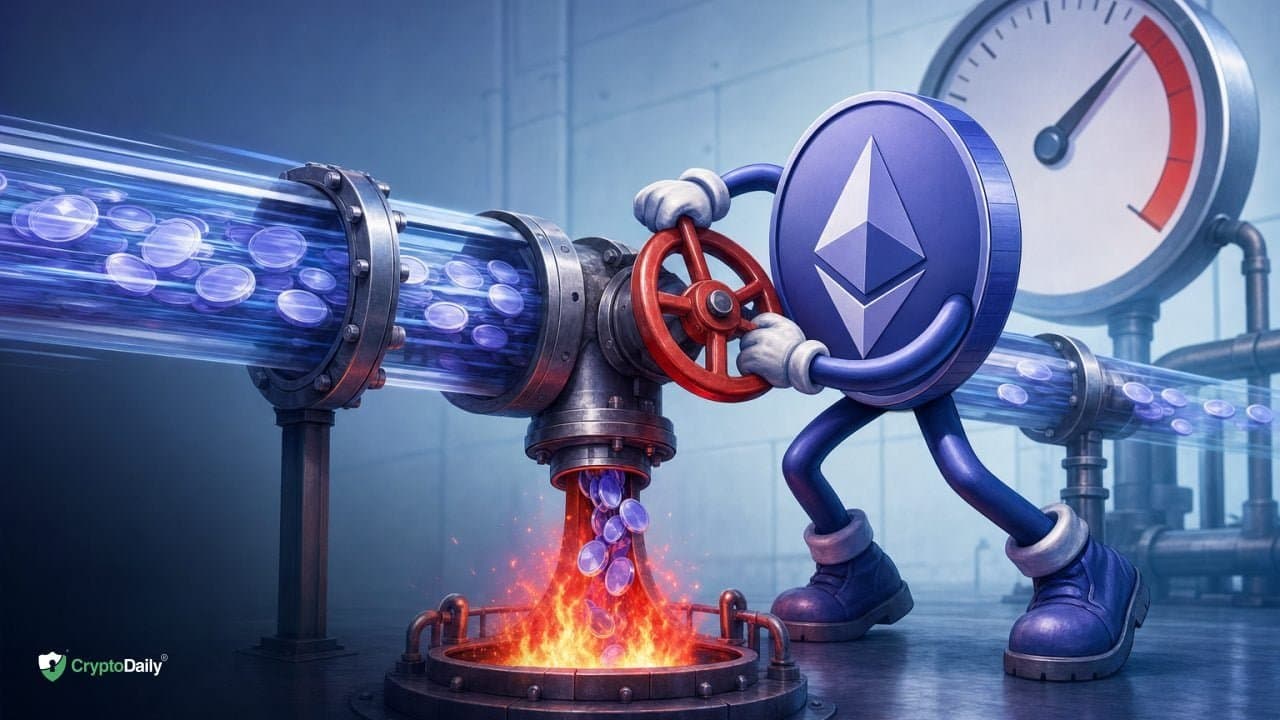
Ethereum's supply math broke earlier this year. Over 90 days through late July, validators pulled in roughly 254,000 ETH in fresh issuance. The protocol burned only 5,200 ETH through base fees. That's net growth of about 0.21% in three months, and the burn is getting worse, not better.
Here's the squeeze. Base-fee burns depend on network activity. When people transact and pay gas, the fee climbs and ETH gets torched. When the chain goes quiet, almost nothing burns. Right now it's quiet. Daily burns dropped from 58 ETH to just 27 ETH in the last month of that window. Meanwhile staking issuance doesn't care what's happening on-chain. It follows the validator curve, mechanical and steady.
The staking base keeps climbing too. Estimates peg about 38.5 million ETH locked, heading toward 40 million by mid-year. That's roughly 32% of all supply sitting in validators, earning rewards whether the network is busy or dormant.
The Idea: Burn What Validators Earn
Some researchers and developers are asking a direct question: what if the protocol burned a cut of validator rewards instead of waiting for user demand to save it? Specifically, burn a portion of priority fees or MEV capture. The mechanism is simple enough. Validators earn three income streams: base issuance, priority fees from users, and MEV extraction. Burn the latter two, and you've got an automatic counterweight to supply growth even when the chain is sleeping.
The math works under the right conditions. If staking continues climbing and base-fee burn stays weak, reward burns could actually cap issuance growth. You'd flip the supply equation. Instead of praying for network activity to drive burn, the protocol creates its own burn through validator income.
What Actually Happens Next
This isn't final. It's an R&D conversation. Ethereum developers would need to redesign how validator rewards flow and which portion gets burned. There are trade-offs. If you burn priority fees, validators make less per block. That could slow staking growth or push people toward pools that game the system differently. If you burn MEV instead, you're attacking one of the staking industry's most profitable angles, and that gets political fast.
The real test will be watching three things: whether staked ETH keeps climbing toward 40 million and beyond, whether base-fee burn stays weak or recovers when on-chain demand picks up, and whether the Ethereum community actually gets serious about MEV burn or reward burns as design.
This article is informational only and should not be construed as financial advice. Ethereum's tokenomics remain subject to change through governance decisions.