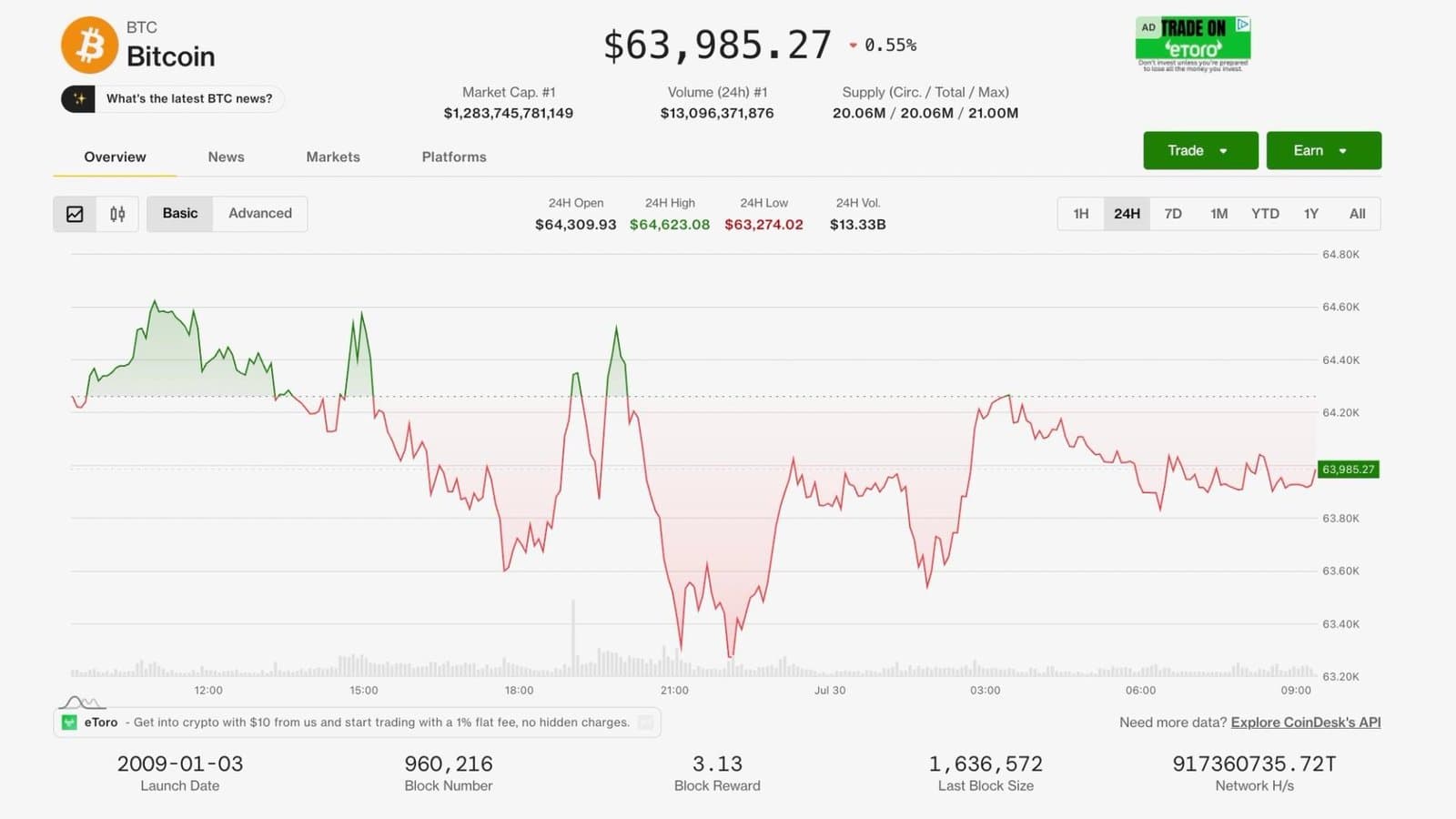
Bitcoin remained close to $64,000 despite a volatile day that saw oil jump by 8% following Iranian missile attacks and mixed signals from the Federal Reserve. The Dow dropped 2.2%, and the Nasdaq fell to a three-month low, yet the leading cryptocurrency showed notable resilience amid the turmoil.
Market Moves and Fed Impact
The Federal Reserve kept interest rates unchanged on Wednesday, but three members of the committee pushed for increases, leaving investors cautious. This divided stance contributed to sharp swings in crypto futures, triggering $286 million in liquidations within 24 hours, with long positions accounting for $186 million and shorts $100 million. These figures highlight a tug-of-war in risk appetite as traders adjusted rapidly to the evolving outlook.
The Fed’s hawkish undertone tends to hurt riskier assets, but Bitcoin’s price stability stands out. Ethereum dipped by only 0.25% while DeFi tokens, including Uniswap’s UNI, outperformed on the day. The crypto futures long/short ratio flipped mildly bearish, with shorts making up 51% of volume, signaling a cautious but stable market environment.
Geopolitical Shockwaves and Market Reaction
Hours after the Fed announcement, Iran launched multiple ballistic missiles targeting U.S. forces, all intercepted successfully. President Donald Trump responded with a promise of a tough retaliation. The geopolitical tension sent oil soaring back above recent lows as supply concerns returned, wiping out earlier declines.
The spike in oil prices weighed heavily on U.S. equities, dragging major indexes down sharply. Futures for the S&P 500 and Nasdaq later recovered to modest gains but remained jittery. Despite the broader risk-off mood, crypto assets managed to hold their ground, reflecting their evolving role as alternative investment vehicles during geopolitical uncertainty.
This content is for informational purposes and not financial advice.