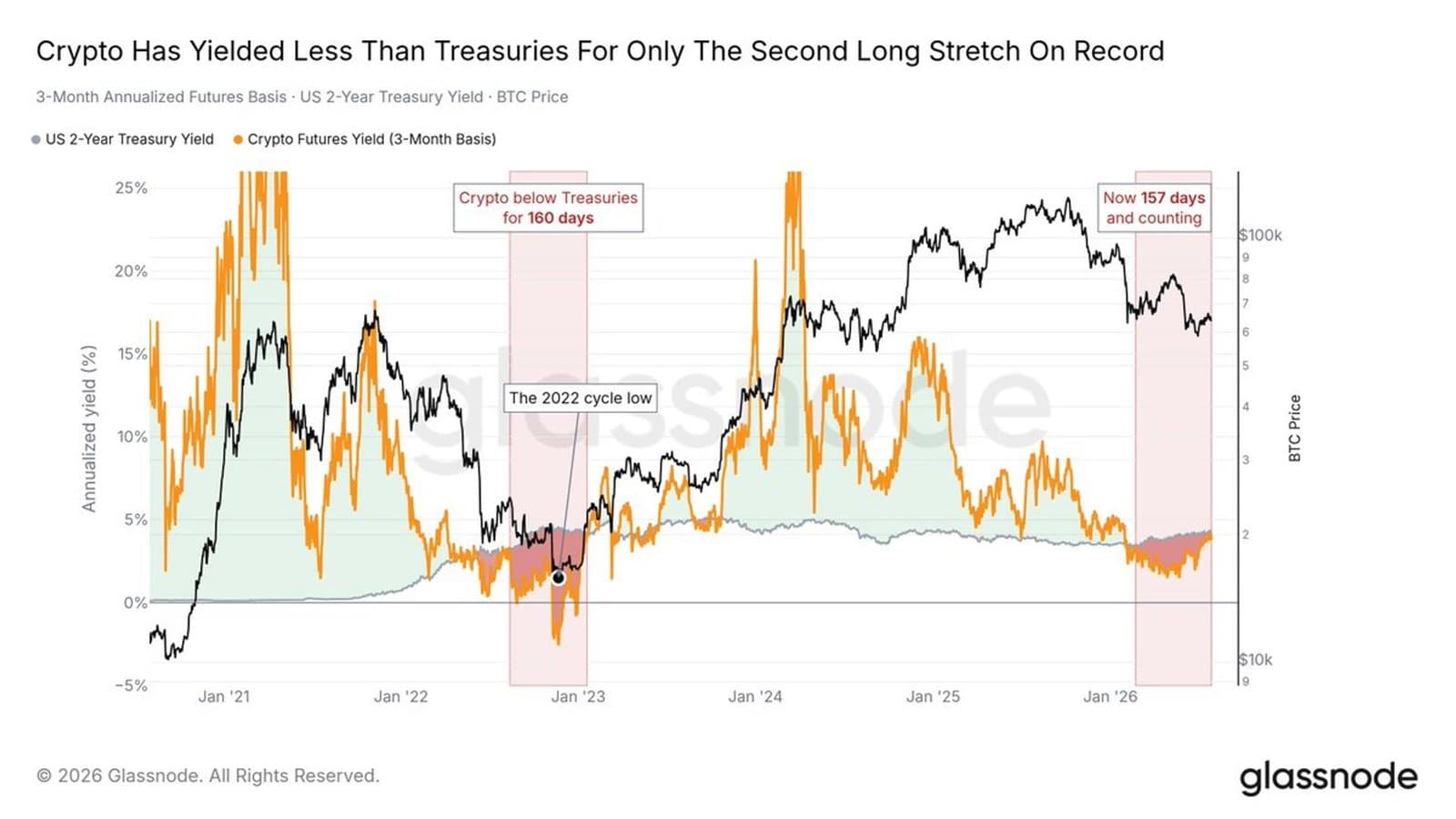
Bitcoin futures, once a lucrative source of high returns for traders, have lost their edge. The annualized yield on quarterly bitcoin futures has dropped from highs above 20% during the 2021 bull run to less than the yield on two-year U.S. Treasury notes. Since February, the futures basis a key metric measuring the gap between futures and spot prices has remained persistently lower than Treasury yields, signaling a dramatic shift in the market.
The carry trade that used to be a reliable strategy involved shorting bitcoin futures while buying spot Bitcoin ETFs, capitalizing on the generous premium futures carried. According to data from Glassnode, the three-month futures basis has yielded under the two-year Treasury note for more than 150 days straight, a streak rivaled only once before during mid-2022 to early 2023. This decline means that investors now earn less from futures trades than from safe government bonds, removing a major incentive to deploy capital in bitcoin futures. This aligns with a sharp drop in futures trading volume, which slid from a February peak of $1.47 trillion to just over $880 million in July, reflecting broader crypto market weakness and reduced arbitrage opportunities.
The shrinking basis reflects how the bitcoin futures market has matured and arbitrageurs have adjusted to a less volatile environment. It also echoes other signs in the crypto space of cooling enthusiasm after the frenzy of previous years. This trend curtails the profitability of once popular carry trades and contributes to lower liquidity in futures markets.